
Most Shopify and WooCommerce stores send emails every week. Very few of them turn those emails Most Shopify and WooCommerce stores send emails every week. Very few of them turn those emails into predictable revenue.
That gap almost always comes down to strategy, not effort. The right email marketing campaign strategies can turn a quiet subscriber list into one of your store’s highest performing sales channels. The wrong ones just add noise to an already crowded inbox.
In this guide, we will walk through the exact strategies behind the best email marketing campaigns in ecommerce today, the ones that consistently grow opens, clicks, and revenue. You will also see real examples for Shopify and WooCommerce stores, a few common mistakes to avoid, and answers to the questions store owners search for most often.
What Is an Email Marketing Campaign Strategy?
An email marketing campaign strategy is the plan behind every email you send. It covers who you are sending to, what you are sending them, why you are sending it, and what action you want them to take.
A strategy is different from a random newsletter. A newsletter is one email. A strategy is the system that decides when that newsletter goes out, who receives it, what happens if someone clicks, and what happens if they do not.
For ecommerce stores, a good strategy usually combines three things:
- Segmentation: sending the right message to the right group of people
- Automation: letting behavior (like an abandoned cart or a recent purchase) trigger emails automatically
- Testing: improving subject lines, content, and timing based on real data, not guesswork
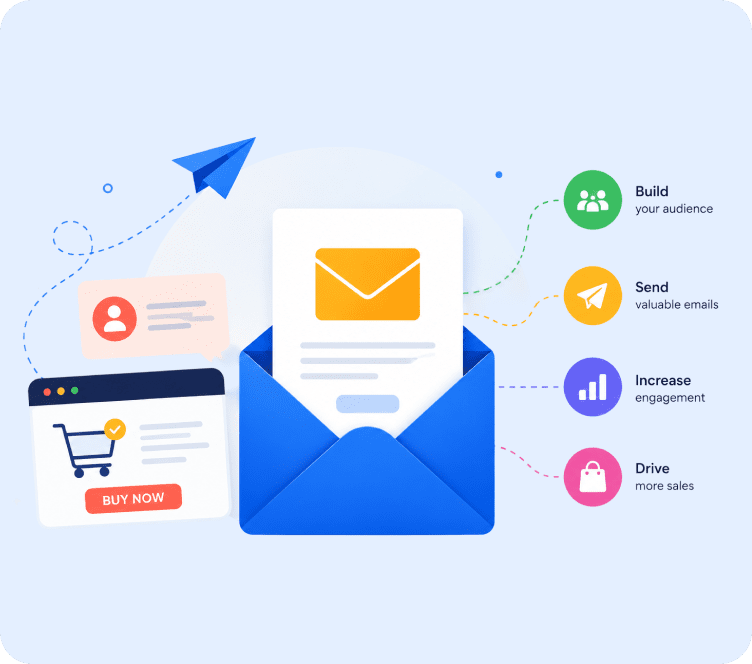
Get these three right, and email becomes one of the most profitable channels in your marketing mix.
Why This Matters for Shopify and WooCommerce Stores
Email is still one of the few marketing channels a store owner fully owns. You are not renting attention from an algorithm like you are on social media. Once someone joins your list, you can reach them directly, as often as you choose, without paying for every impression.
That ownership matters more in 2026 than it ever has. Ad costs keep climbing, organic social reach keeps shrinking, and privacy changes keep making it harder to track customers across platforms. Email does not have those problems.
For ecommerce specifically, email marketing tends to influence three revenue-critical moments:
- Getting someone to buy for the first time, through welcome series and early discount offers
- Recovering revenue that would otherwise disappear, through abandoned cart and browse abandonment emails
- Turning one-time buyers into repeat customers, through post-purchase flows, replenishment reminders, and loyalty campaigns
Stores that treat email as an afterthought usually rely on random promotional blasts. Stores that treat it as a strategy build automated flows that quietly generate revenue in the background, every single day, without anyone hitting send.
If you want a deeper look at how the individual pieces come together for Shopify stores specifically, our Shopify email marketing guide breaks down setup, flows, and app choices in detail.
Foundational Strategies Every Store Should Start With
These are the basics every store should get right before layering on anything more advanced. Skip these, and even the best automation will underperform.
1. Segment Your Audience Before You Write a Single Email
Sending the same email to your entire list is the fastest way to get ignored. Your list is not one audience. It is several smaller audiences with different habits, interests, and buying stages.
A simple starting point for most ecommerce brands looks like this:
- New subscribers who have not purchased yet
- First-time buyers
- Repeat customers
- High-spending or VIP customers
- Inactive or lapsed customers
Say you run a clothing store with two very different customer types: teenagers looking for trendy pieces, and working professionals who want formal wear. Sending both groups the same “New Arrivals” email wastes the opportunity. Segmenting by past purchase category and sending each group relevant products almost always lifts click rates.
This is exactly where a platform like Adflipr helps. It automatically organizes your Shopify or WooCommerce contacts into segments based on purchase history and behavior, so you are not manually sorting spreadsheets every week.
2. Personalize Beyond the First Name
Personalization used to mean “Hi {FirstName}.” That is no longer enough to stand out. Real personalization uses what you know about a customer’s behavior, not just their name.
Ways to personalize that actually move the needle for an ecommerce email marketing strategy:
- Recommending products based on past purchases
- Sending emails triggered by browsing behavior on your store
- Adjusting content based on customer segment (new vs returning vs VIP)
- Referencing the specific product someone viewed or abandoned
For example, if a WooCommerce store sells fitness gear and a customer recently bought running shoes, a follow-up email about compression socks or a training plan feels relevant. A generic “check out our sale” email does not.
3. Write Subject Lines People Actually Want to Open
Your subject line has one job: get the email opened. Everything else in your campaign depends on that first decision.
Strong subject lines are usually:
- Short, ideally under 50 characters
- Specific, not vague
- Curiosity-driven or benefit-driven, not pushy
Examples that tend to perform well:
- “Your cart is waiting (and so is 10% off)”
- “The jacket you looked at is almost gone”
- “3 ways to make this last longer”
Subject lines that lean too hard into urgency, like “BUY NOW!!!” or “LAST CHANCE, ACT FAST!!!”, tend to trigger spam filters and reader fatigue. A little restraint almost always outperforms all caps and exclamation points.
4. Lead With Value, Not a Sales Pitch
If every email you send is asking for a sale, subscribers stop paying attention fast. The best email marketing campaigns balance promotional emails with content that is genuinely useful.
Value-driven content can include:
- Styling or usage tips related to what someone bought
- Simple how-to guides
- Behind-the-scenes brand stories
- Early access to new products, positioned as a thank-you rather than a pitch
A skincare brand, for example, might send “3 signs your routine needs a refresh” instead of “Buy our new serum.” Both can lead to a sale, but the first one builds trust first.
5. Use One Clear Call to Action Per Email
Every email should have a single, obvious next step. When you cram five links and three CTAs into one email, readers do not know what to click, so many click nothing at all.
Common CTA examples that work well for ecommerce:
- Shop Now
- Complete Your Order
- Claim Your Discount
- Read the Guide
Keep the CTA button visible without much scrolling, and repeat it once more further down for longer emails.
6. Design for Mobile First
More than half of ecommerce emails are opened on a phone. If your layout breaks on mobile, you lose the sale before the reader even sees your offer.
A mobile-friendly email typically has:
- Short paragraphs, two to three lines max
- A single column layout
- Large, tappable buttons instead of text links
- Images that compress well and load fast
Test every campaign on a phone before you hit send. It takes thirty seconds and it catches most formatting problems.
Advanced Tactics That Push Revenue Further
Once the basics are in place, these strategies are what separate stores that treat email as a side channel from stores that treat it as a real revenue engine.
7. Build a Consistent Sending Cadence
Random sending confuses subscribers. If you disappear for six weeks and then send three emails in one week, people forget who you are and unsubscribe or mark you as spam.
Pick a rhythm you can actually maintain, whether that is weekly, biweekly, or monthly, and stick to it. Consistency builds familiarity, and familiarity is what keeps your brand top of mind when someone is ready to buy again.
8. Automate the Flows That Actually Drive Revenue
This is arguably the single highest-leverage move in any set of email marketing best practices. Automated flows run in the background and convert without any manual work once they are built.
The core flows every Shopify or WooCommerce store should have:
| Automated Flow | Trigger | Primary Goal |
|---|---|---|
| Welcome series | New subscriber signs up | Introduce the brand, convert first purchase |
| Abandoned cart | Cart left without checkout | Recover lost revenue |
| Browse abandonment | Product viewed, no add to cart | Re-engage interest |
| Post-purchase | Order completed | Reduce buyer’s remorse, drive reviews |
| Win-back | No purchase in 60 to 90 days | Re-engage lapsed customers |
| Replenishment | Consumable product likely running out | Drive repeat purchase |
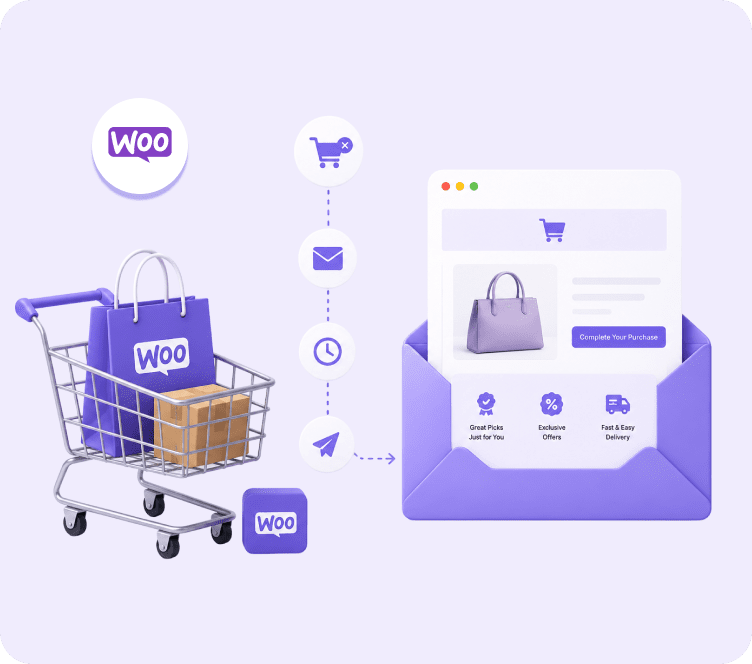
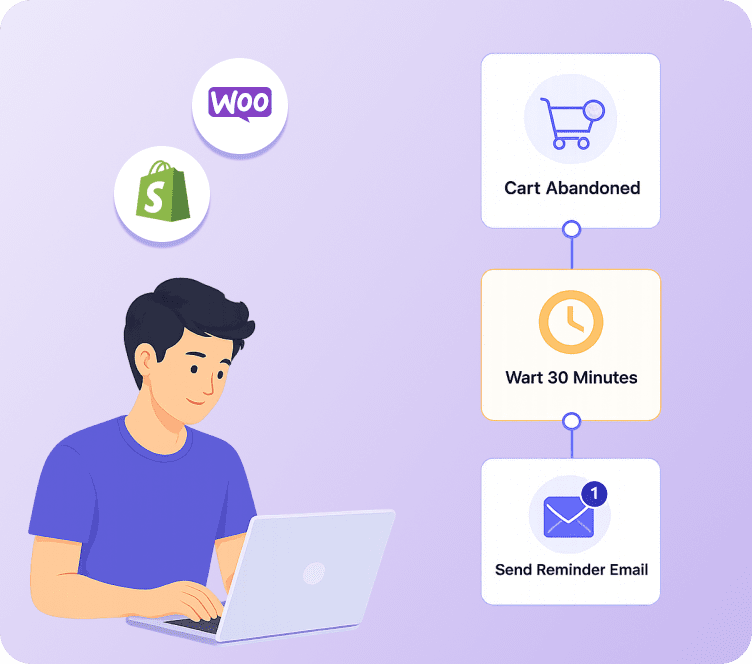
Cart abandonment alone is worth building well. A large share of online carts get abandoned before checkout, and a well-timed three-email sequence (one reminder, one nudge, one small incentive) can recover a meaningful chunk of that lost revenue. This is one of the areas where Adflipr’s built-in abandoned cart recovery for Shopify and WooCommerce pays for itself quickly, since it triggers automatically the moment a customer leaves without buying.
For a closer comparison of how cart recovery emails stack up against on-site checkout fixes, see our post on cart recovery vs checkout optimization.
9. A/B Test the Elements That Actually Matter
Guessing what works is expensive. Testing is cheap and compounding. Small wins in open rate or click rate add up fast across every campaign you send afterward.
Elements worth testing, roughly in order of impact:
- Subject lines
- Send times
- CTA button text and placement
- Email length (short vs detailed)
- Hero image vs no image
Test one variable at a time so you actually know what caused the difference. Testing five things at once tells you nothing useful.
10. Segment by Behavior, Not Just Demographics
Age, gender, and location are useful, but behavior is far more predictive of what someone will buy next. Purchase frequency, average order value, product category preference, and recency of last purchase all tell you more than basic demographic data ever will.
A store selling home goods might build behavior-based segments like:
- Bought once, over 90 days ago (win-back candidate)
- Bought three or more times (loyalty candidate)
- High average order value (VIP candidate)
- Browsed a category but never purchased from it (nurture candidate)
Each segment gets a different message, because each one is at a different point in the relationship with your brand.
11. Protect Your Deliverability and List Health
None of the strategies above matter if your emails land in spam. Deliverability is the quiet foundation underneath every good ecommerce email marketing strategy.
Basic list hygiene practices:
- Remove or suppress addresses that have not opened anything in 6+ months
- Never buy or import unverified email lists
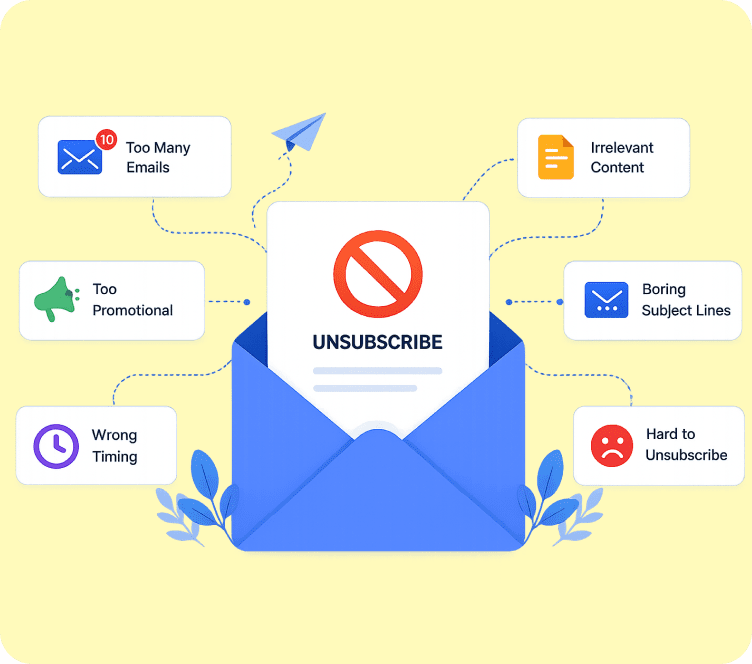
- Make unsubscribing easy and honest, never hidden
- Warm up a new sending domain gradually instead of blasting your full list on day one
A smaller, engaged list will always outperform a large, unengaged one.
12. Track the Metrics That Actually Tie to Revenue
Open rate and click rate are useful signals, but they are not the finish line. The metrics that matter most for a store owner are:
- Revenue per email sent
- Conversion rate from email traffic
- Recovered revenue from automated flows specifically
- List growth rate and unsubscribe rate over time
If you are not sure which numbers matter most or what “good” looks like for your store size, our email marketing metrics and benchmarks guide breaks down realistic targets for Shopify and WooCommerce brands.
Shopify vs WooCommerce: Where Execution Differs
The core strategy is the same across platforms, but execution differs slightly based on the data and integrations available.
| Factor | Shopify Email Marketing | WooCommerce Email Marketing |
|---|---|---|
| Customer data access | Native checkout data, easy to sync | Depends on plugin setup and hosting |
| Abandoned cart tracking | Built into most apps out of the box | Needs a plugin or connected tool |
| Automation setup | App-based, generally faster to launch | More flexible, but often needs manual configuration |
| Best fit for | Fast-growing DTC brands wanting speed | Brands wanting full control over their store and data |
Regardless of platform, the same core strategy applies: segment your list, automate your key flows, personalize your content, and test constantly. Adflipr connects natively with both Shopify and WooCommerce, so store owners do not have to rebuild their entire email setup when switching platforms or scaling up.
Real Ecommerce Examples in Action
Example 1: Fashion brand recovers abandoned checkouts. A mid-sized Shopify fashion store noticed a large share of shoppers were adding items to cart but leaving before checkout. They set up a three-email abandoned cart sequence: a gentle reminder after one hour, a second email after 24 hours showing the exact items left behind, and a final email after 48 hours with a small time-limited discount. This single flow became one of their top three revenue sources, running entirely on autopilot.
Example 2: Supplement brand drives repeat purchases. A WooCommerce store selling monthly supplements set up a replenishment flow timed to when a customer’s supply would typically run out. Instead of hoping customers remembered to reorder, the email arrived right on schedule with a one-click reorder link. Repeat purchase rate climbed noticeably within a few months.
Example 3: Home goods brand wins back lapsed customers. A DTC home goods brand segmented customers who had not purchased in 90 days and sent a dedicated win-back campaign with a personalized product recommendation based on their last order, plus a modest discount. It outperformed their standard promotional emails by a wide margin, because it was targeted instead of generic.
Best Practices Worth Following
Following a few core email marketing best practices consistently matters more than chasing every new tactic.
- Start with the automated flows before investing heavily in one-off campaigns. They run continuously and require no ongoing manual effort.
- Keep your list clean. A smaller, engaged list beats a large, disengaged one every time.
- Match email frequency to your catalog size and offer cadence, not to what competitors are doing.
- Always test on mobile before sending.
- Review performance monthly, not just after each individual campaign.
- Give every campaign one clear goal and one clear CTA.
Common Mistakes to Avoid
- Sending the same email to everyone. This is the single biggest reason engagement drops over time.
- Ignoring automation. Manual-only email marketing does not scale and leaves revenue on the table every day a flow is missing.
- Overloading emails with multiple CTAs. Confused readers click nothing.
- Skipping mobile testing. A broken layout on a phone kills conversions instantly.
- Chasing opens instead of revenue. A high open rate with no sales is a vanity metric, not a result.
- Buying email lists. This destroys deliverability and can violate anti-spam regulations.
- Never testing anything. Without testing, you are guessing, and guessing is expensive at scale.
Conclusion
The best email marketing campaign strategies are not complicated. They come down to knowing your audience, automating the flows that matter most, personalizing what you send, and improving continuously based on real data.
Start small if you need to. Get your welcome series and abandoned cart flow running first, since those two alone typically deliver the fastest return. Then layer in segmentation, testing, and win-back campaigns as your list grows.
If you are looking for a platform built specifically to make this easier to execute on Shopify or WooCommerce, without a steep learning curve or a huge price tag, Adflipr’s email marketing platform is built for exactly that. From segmentation to abandoned cart recovery to post-purchase automation, it is designed around what ecommerce stores actually need.
For more on turning first-time buyers into repeat customers, take a look at our guide on customer retention email strategies.
Frequently Asked Questions
What are email marketing campaign strategies?
These strategies are the plans and tactics behind the emails a business sends, covering audience segmentation, personalization, automation, timing, and testing. For ecommerce stores, these strategies typically focus on converting subscribers into buyers and turning one-time buyers into repeat customers through targeted, automated messaging.
How do I create an effective email marketing campaign strategy?
Start by segmenting your audience based on behavior and purchase history. Then set up core automated flows like welcome series, abandoned cart recovery, and post-purchase follow-ups. Personalize content where possible, keep a consistent sending schedule, and test subject lines and CTAs regularly to improve results over time.
Why is email marketing important for Shopify and WooCommerce stores?
Email is a channel you fully own, unlike social media reach which depends on algorithms. For Shopify and WooCommerce stores, email marketing campaign strategies directly support first purchases, abandoned cart recovery, and repeat purchase growth, often at a lower cost per sale than paid ads.
What is a good open rate for ecommerce email marketing?
Open rates vary by industry and list health, but many ecommerce brands see average open rates in the 15 to 25 percent range for promotional campaigns, while automated flows like welcome emails and abandoned cart emails typically perform higher since they are triggered by recent, relevant behavior.
What mistakes should I avoid in email marketing campaigns?
The most common mistakes include sending the same email to your entire list without segmentation, skipping automation, using multiple competing CTAs in one email, ignoring mobile formatting, and focusing only on open rates instead of revenue per email. Avoiding these alone significantly improves most campaigns.
Is email marketing worth it for small Shopify stores?
Yes. Email marketing tends to be one of the most cost-effective channels available, even for small stores, because it does not require ongoing ad spend and it targets people who have already shown interest in the brand. Starting with a welcome series and abandoned cart flow is usually enough to see meaningful early results.
Is email marketing useful for WooCommerce stores specifically?
Yes, though WooCommerce email marketing usually needs a dedicated tool connected to the store since native email features are limited compared to Shopify’s ecosystem. Once connected, the same core email marketing campaign strategies (segmentation, automation, personalization) apply and tend to perform just as well.
What is the difference between an email campaign and email automation?
An email campaign is typically a one-time send to your list or a segment, such as a holiday promotion. Email automation refers to flows that trigger automatically based on customer behavior, like an abandoned cart or a completed purchase. Strong strategies usually combine both.
How do I know if my email marketing campaign strategy is working?
Track revenue per email sent, conversion rate from email traffic, and recovered revenue from automated flows specifically, not just open and click rates. If automated flows like abandoned cart and welcome series are generating consistent revenue every month without manual effort, your strategy is working.