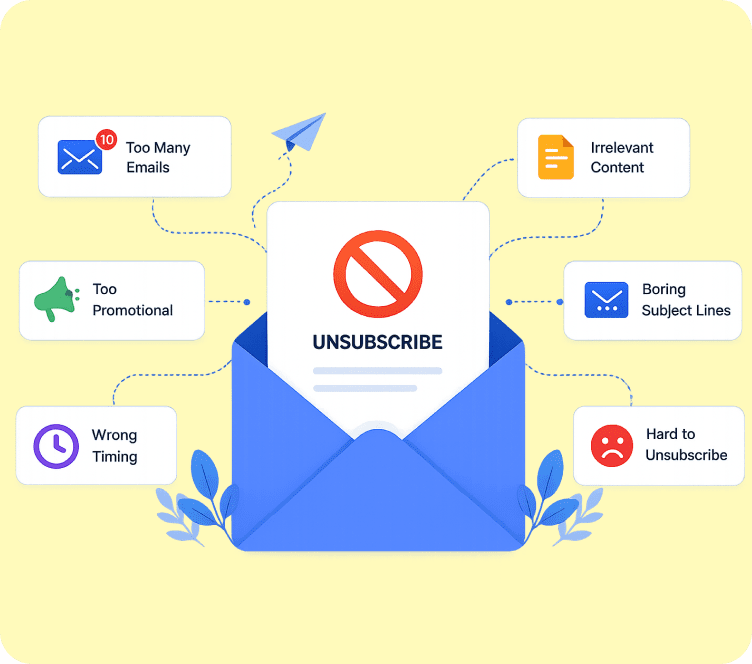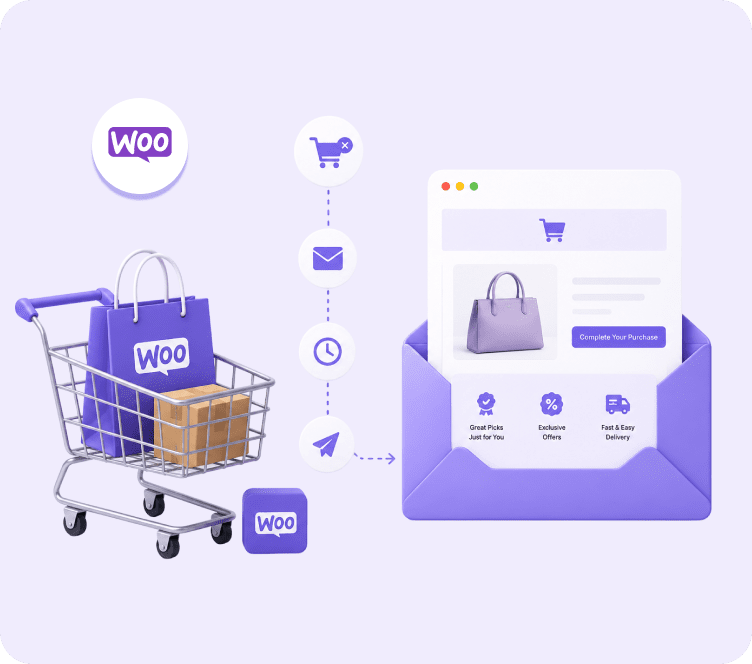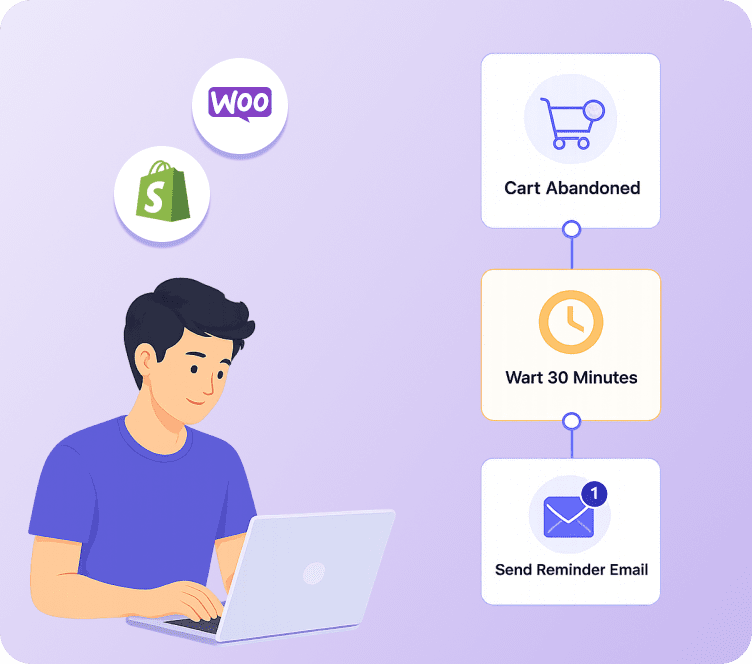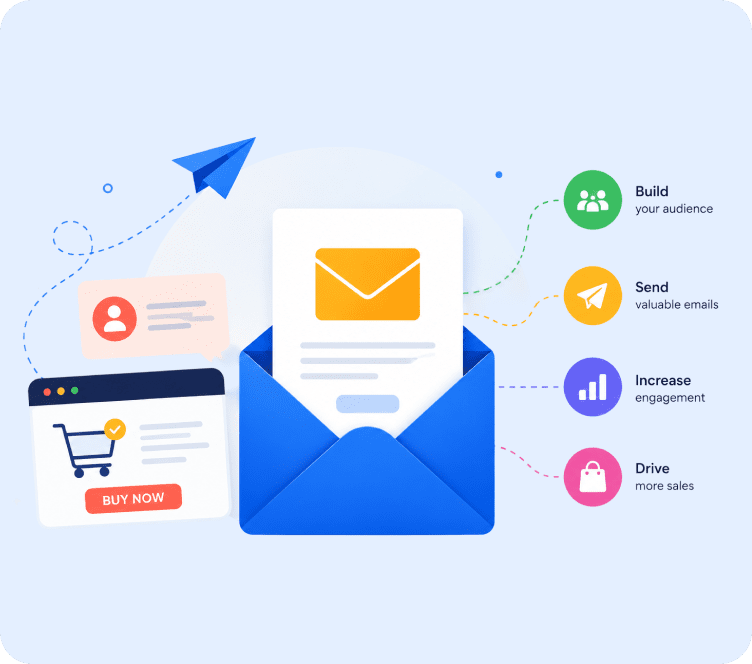

Maya runs a small skincare store on Shopify. Two years ago, she set up a welcome email, an abandoned cart flow, and a monthly newsletter, then went back to running her business. Product launches, customer service, restocking, the usual chaos of owning a store.
Last month, she finally looked at her email numbers again. Open rates had slipped from 28 percent to 14 percent. Nobody had changed anything, or so she thought. She just stopped checking.
That is exactly the moment most store owners realize they need an email marketing audit. Not because something broke loudly, but because something broke quietly, over months, while nobody was watching.
It’s not about finding blame. It is about sitting down with your actual data and figuring out what is working, what is quietly losing you money, and what needs fixing before your next big sale. If you run a Shopify or WooCommerce store, this matters even more, because email is often the channel with the highest ROI, yet the one that gets the least attention once it is set up and left alone.
We will come back to Maya’s store a few times in this guide, because her story is a pretty common one. For now, let’s walk through exactly what this process is, why it matters for ecommerce brands, and how to run one using a practical checklist, right down to your subject lines and the templates you send every day.
What Is an Email Marketing Audit?
Think of it like a health checkup, but for your email channel. Nothing about Maya’s store looked broken from the outside. Her flows were still “active.” Emails were still going out. But underneath, the engine had been quietly losing power for months.
An email marketing audit is a structured review of your entire email program. It covers your list health, campaign performance, automation flows, subject lines, template design, deliverability, and revenue impact.
The goal is simple. Find out what is helping your store grow and what is holding it back, using facts instead of guesswork.
A proper audit usually covers:
- List quality and growth
- Segmentation and personalization
- Campaign and flow performance
- Subject line and preview text quality
- Template design and spam risk
- Deliverability and sender reputation
- Compliance, such as GDPR and CAN-SPAM
- Revenue attribution
For ecommerce stores, there is one more layer that generic guides often skip. How well does your email marketing connect to your actual store data, like abandoned cart behavior, order history, and product browsing.
Turn more visitors into paying customers, automatically
Set up abandoned cart recovery, welcome flows, and post-purchase emails in minutes, built specifically for Shopify and WooCommerce stores.
Why an Email Marketing Audit Matters for Ecommerce Stores
Here is the honest truth. Most Shopify and WooCommerce stores set up a welcome flow and an abandoned cart flow once, and never touch them again. Meanwhile, the product catalog changes, pricing changes, the customer base grows, and the email strategy stays frozen in time.
This is exactly what happened to Maya. Her welcome flow was still offering a discount code for a product line she had discontinued eight months earlier. New customers were clicking a dead link on day one of knowing her brand.
An audit matters because it forces you to check whether your email strategy has kept up with your business. A few reasons this really moves the needle:
It protects your revenue. Email marketing typically drives a large share of total ecommerce revenue for stores that use it well. If your flows are outdated, your subject lines are stale, or your templates are hurting deliverability, you are leaving real money on the table every month.
It catches deliverability problems early. If open rates have quietly dropped over the last few months, it is often a deliverability or template issue, not a content issue. An audit catches this before it damages your entire sender reputation.
It aligns email with your current catalog and offers. New collections, updated pricing, seasonal promotions, none of this matters if your automated flows and templates are still promoting products you discontinued last year.
It improves engagement at every step of the funnel. From the subject line that gets the email opened, to the template that keeps someone reading, to the cart recovery emails that bring shoppers back, an audit reviews the whole journey, not just one metric.
How to Conduct an Email Marketing Audit: Step by Step
A good audit follows a clear process.
Step 1: Set your audit goals
Decide what you are trying to improve. Are you trying to boost revenue per email, fix a falling open rate, or get a full health check before Black Friday? Your goal shapes what you focus on.
Step 2: Pull your performance data
Gather your last 3 to 6 months of email data. Open rates, click rates, conversion rates, unsubscribe rates, and revenue per campaign. Most Shopify and WooCommerce email tools, including Adflipr, let you export this in a few clicks.
Step 3: Review your list health
Check your subscriber growth rate, your active versus inactive contacts, and how many addresses are bouncing or marked as spam.
Step 4: Audit your subject lines and preview text
This step is easy to skip, but it decides whether anyone even sees the rest of your email. We will cover this in detail in the next section.
Step 5: Audit your email templates
Check every template against the deliverability and trust signals that spam filters and mailbox providers actually look for. More on the 9 specific parameters below.
Step 6: Audit your automation flows
Go through your welcome series, abandoned cart flow, browse abandonment, post-purchase flow, and win-back campaigns one by one. Check the timing, the copy, the offers, and whether the triggers still make sense.
Step 7: Check deliverability
Look at your sender reputation, authentication setup like SPF, DKIM, and DMARC, and your bounce and complaint rates. Running through a short email deliverability checklist at this stage catches most of the issues that quietly tank open rates over time.
Step 8: Document findings and build an action plan
An audit without action items is just a report nobody reads. Turn your findings into a prioritized list. Fix this now, fix this in 30 days, monitor this over time.
Turn more visitors into paying customers, automatically
Set up abandoned cart recovery, welcome flows, and post-purchase emails in minutes, built specifically for Shopify and WooCommerce stores.
Why You Should Audit Every Campaign Before You Hit Send
Everything covered so far is about the bigger, twice-a-year style email marketing audit. But there is a second, smaller kind of audit that matters just as much, and it happens every single time you send a campaign, not twice a year.
Here is the problem. Once you click send, you cannot take it back. A typo in your subject line, an expired discount code, a broken link, or a template that is mostly one big image, all of it goes out to your entire list in seconds. There is no undo button on an email blast.
This is why a quick pre-send check matters so much for ecommerce stores specifically. You are usually sending time-sensitive campaigns, flash sales, restock alerts, cart reminders, where a mistake does not just look unprofessional, it costs you real revenue in that exact moment.
A solid pre-send check should cover:
- Does the subject line and preview text actually match the offer inside the email?
- Does the template pass a basic email template audit, no oversized images, no missing unsubscribe link, no broken links?
- Are the links pointing to the right product, collection, or discount page?
- Would this email load quickly and look right on a phone?
Here is how the two types of audits compare:
| Full Email Marketing Audit | Pre-Send Campaign Check | |
|---|---|---|
| How often | Twice a year, with quarterly check-ins | Every single campaign |
| What it covers | List health, flows, deliverability trends, revenue | Subject line, template, links, mobile rendering |
| Time needed | A few hours | A few minutes |
| Main goal | Long-term strategy and revenue growth | Catching mistakes before they reach your list |
| Best tool | Full performance reports and list analytics | AI subject line generator and email template auditor |
Both matter. The full audit tells you if your overall strategy is working. The pre-send check makes sure today’s campaign does not undo that progress with an avoidable mistake. This is exactly why Adflipr builds subject line testing and the 9 parameter Email Auditor directly into the email builder, so this check happens automatically before you send, instead of being a separate task you have to remember every time.
Auditing Your Subject Lines and Preview Text
Your subject line and preview text are the only two things a subscriber sees before deciding whether to open your email. Everything else, your design, your offer, your copy, only gets seen if the subject line does its job first.
During this process, go back through your last 10 to 15 campaigns and ask a few questions:
- Are your subject lines specific, or do they sound like every other promotional email in the inbox?
- Is your preview text adding new information, or just repeating the subject line?
- Are you testing more than one subject line before a big send?
- Are certain words or phrases showing up again and again without much thought?
This is exactly where an AI email subject line generator earns its place in your audit process. Instead of guessing why a subject line underperformed, Adflipr’s AI Subject Line and Preview Text Generator can both audit what you already sent and write new options. You can paste in an old subject line and it will tell you why it may not be working, whether it is too long, too generic, or missing a hook. Then it generates several fresh, open rate friendly variations based on your campaign goal, whether that is a flash sale, a restock alert, or a cart reminder, along with preview text that actually adds something new instead of repeating the subject line.
Running your subject lines through this kind of AI email subject line generator during an audit helps you spot patterns fast. If your open rates are flat across several campaigns, weak subject lines are usually the first thing to check, before you touch design or offers. You can see the full feature and try it directly on the Adflipr email marketing page.
Why Subject Line Audits Matter in a Broader Email Marketing Audit
A subject line audit on its own only tells half the story. It needs to sit inside your wider audit process, alongside your template checks and your flow checks, so you can tell whether a drop in opens is a subject line problem, a deliverability problem, or both at once.
Auditing Your Email Templates: The 9 Parameters That Matter
Here is the part most audits miss entirely. You can get someone to open your email with a great subject line, and still lose them, or worse, land in spam, because of a problem hiding inside the template itself.
A proper email template audit checks 9 specific parameters. These are the same things spam filters, mailbox providers, and experienced email marketers look for. At Adflipr, this is built directly into the Email Auditor tool inside the Adflipr Email Builder page, so every template gets scored against all 9 parameters the moment you finish designing it, before you ever hit send.
1. Subject Line and Preview Text Length
Long subject lines get cut off on mobile, and certain words can quietly hurt deliverability. This check overlaps with the subject line audit above but looks specifically at length and formatting.
2. Business or Sender Name
Recipients need to instantly recognize who the email is from. A missing, generic, or inconsistent sender name is a common trust and spam signal.
3. Unsubscribe Link
This one is not optional. A missing or broken unsubscribe link is both a legal issue under regulations like CAN-SPAM and GDPR, and a major spam trigger.
4. Physical Business Address
A valid physical address is a legal requirement for marketing emails in many regions. It also acts as a trust signal to spam filters that you are a legitimate business.
5. Template File Size
A heavy, bloated template takes longer to load and can get clipped by providers like Gmail. Large file sizes usually come from oversized images that were never compressed.
6. Text to Image Ratio
This is one of the most overlooked checks in the whole process. If your email is almost entirely one big image with barely any real text, spam filters read that as suspicious, since spammers have historically used image-heavy emails to hide content from text scanners. A healthy text to image ratio keeps enough real, readable copy alongside your visuals.
7. Spammy Content and Trigger Words
Certain words and phrases, especially around urgency, money, or exaggerated claims, are known spam triggers. Rework flagged phrases into language that reads just as persuasive without raising red flags.
8. Broken or Suspicious Links
Every link in your template should be checked. Broken links hurt user experience and trust, while shortened or mismatched links can look suspicious to spam filters.
9. Mobile Responsiveness and HTML Structure
Since most ecommerce customers open emails on their phone, this checks whether your template renders correctly on mobile, along with catching messy or broken HTML that can cause display issues across different email clients.
Turn more visitors into paying customers, automatically
Set up abandoned cart recovery, welcome flows, and post-purchase emails in minutes, built specifically for Shopify and WooCommerce stores.
Email Marketing Audit Checklist for Ecommerce Stores
Here is a practical email marketing audit checklist you can run through today, written specifically for Shopify and WooCommerce stores.
List Health
- What is your list growth rate over the last 90 days?
- What percentage of your list has not opened an email in 90 or more days?
- Do you have a re-engagement or sunset flow for inactive subscribers?
- Are you collecting emails at multiple touchpoints, like checkout, popups, and loyalty programs?
Subject Lines and Templates
- Have you tested more than one subject line on recent campaigns?
- Have you run your templates through a full audit for the 9 parameters above?
- Is your text to image ratio balanced across your main templates?
- Is your unsubscribe link and business address visible on every send?
Segmentation
- Are you separating first-time buyers from repeat customers?
- Do you have a VIP or high-spender segment?
- Are you segmenting by product category or browsing behavior?
Automation Flows
- Is your welcome series still promoting current products and offers?
- Is your abandoned cart flow triggering on time, with the right cart data?
- Do you have a browse abandonment flow for people who viewed but did not add to cart?
- Is there a post-purchase flow that includes shipping updates and a review request?
Deliverability
Use this quick email deliverability checklist during your audit:
- Are your SPF, DKIM, and DMARC records set up correctly?
- What is your current bounce rate and complaint rate?
- Have you checked your sender score in the last 30 days?
Revenue and Reporting
- What percentage of your total store revenue comes from email?
- What is your revenue per recipient across your top flows?
- Do you review these numbers monthly, or only when something breaks?
Shopify Email Marketing Audit: What to Check
If you run a Shopify store, this process should specifically look at how well your email tool is synced with your store data.
Check whether your abandoned cart emails are pulling live cart data, including product images and prices, not static placeholder content. Review your post-purchase flow to see if it references the actual product purchased.
Also check your customer segments inside Shopify. Are you separating one-time buyers from repeat customers? Run your welcome series and cart recovery templates through an email template audit to catch outdated offers, oversized images, or a poor text to image ratio before your next big sale.
This is the exact check that caught Maya’s dead discount link. A five-minute template audit found what months of declining open rates had been hiding.
WooCommerce Email Marketing Audit: What to Check
WooCommerce stores face a slightly different challenge. Because WooCommerce is more customizable, email setups can get messy fast, especially if multiple plugins were added over time without a clear strategy.
During this check, see whether your abandoned cart plugin and your main email marketing tool are talking to each other, or if you have duplicate emails going out from two different systems. This is one of the most common WooCommerce mistakes, and it quietly damages both deliverability and customer trust.
Review your order status triggers too. Many WooCommerce stores only set up a completed order email and forget on hold, processing, and refunded statuses, which all need their own communication and their own quick template audit.
What Customers Say
These are the kinds of results store owners typically share after running a full audit and acting on the findings.
Maya, Shopify skincare store: “I genuinely thought nothing was wrong. My flows were still active, emails were still going out. It wasn’t until I ran a proper audit that I found a dead discount code sitting in my welcome series for eight months. Once we fixed the offer and tested a few new subject lines, welcome series revenue jumped 22 percent in the first month.”
A WooCommerce store selling supplements: “Our audit showed our main promotional template was almost 90 percent image with barely any real text. We had no idea our emails were quietly landing in spam. After we rebalanced the text to image ratio and shrunk the file size, our inbox placement improved and clicks nearly doubled.”
A WooCommerce store selling home decor: “Our abandoned cart emails were going out a full 24 hours after someone left their cart. Moving the first email to 1 hour, with a second reminder at 24 hours, nearly doubled our recovered cart revenue.”
Best Practices for Running Your Audit
- Run a full audit at least twice a year, with a quick check-in every quarter.
- Always look at revenue per email and revenue per flow, not just open and click rates.
- Test subject lines with an AI writing tool before assuming your content or offer is the problem.
- Run every active template through a full 9 parameter check, not just one or two.
- Keep your text to image ratio balanced across every template, not just your newsletters.
- Prioritize fixes that touch your highest revenue flows first, usually cart recovery and post-purchase.
Common Mistakes to Avoid
- Only checking open rates and ignoring revenue and conversion data.
- Auditing campaigns but skipping automated flows completely, even though flows usually drive the most revenue per email.
- Assuming a weak subject line is a content problem when it might just need testing with better tools.
- Ignoring template health, like text to image ratio, file size, or a missing unsubscribe link.
- Treating deliverability as a one-time setup instead of something to monitor regularly.
- Running an audit and never turning the findings into an action plan.
How Adflipr Helps With Your Email Marketing Audit
Adflipr is built specifically for Shopify and WooCommerce stores, so running a full audit is much simpler than piecing data together from multiple tools.
Since Adflipr connects directly to your store, you get real-time visibility into how your welcome series, abandoned cart flow, browse abandonment, and post-purchase automation are performing, all tied back to actual revenue.
A few ways Adflipr supports the audit process:
- An AI email subject line generator built into the platform, so you can quickly test and improve subject lines and preview text during your audit instead of guessing.
- A 9 parameter Email Auditor tool, built right into the Adflipr Email Builder page, that checks subject line length, sender name, unsubscribe link, physical address, file size, text to image ratio, spammy content, broken links, and mobile responsiveness in one scan.
- Revenue-based reporting so you can see exactly how much each flow and campaign contributes to your store’s income.
- Built-in ecommerce automation for cart recovery, post-purchase journeys, and win-back flows, so you are not stitching together separate plugins.
- Customer segmentation based on real purchase behavior, order history, and browsing activity.
- Active contact billing, so you only pay for subscribers who are actually engaging, which naturally keeps your list clean and your deliverability healthy.
- Shopify and WooCommerce native integration, so your product data, order status, and customer segments stay in sync automatically.
If your last audit revealed messy templates, flat subject lines, or unclear revenue attribution, having these checks built into one platform removes a lot of the guesswork going forward.
Turn more visitors into paying customers, automatically
Set up abandoned cart recovery, welcome flows, and post-purchase emails in minutes, built specifically for Shopify and WooCommerce stores.
Conclusion
Maya’s store did not need a rebuild. It needed one honest look at what was actually happening inside her emails. That is really what an email marketing audit is. Not a punishment for doing something wrong, just the habit of checking in before small problems turn into months of lost revenue.
This kind of audit is one of the most underrated things a Shopify or WooCommerce store can do for its bottom line. It is not just about opens and clicks. Done right, it looks at your subject lines, your templates, your flows, and your deliverability together, and shows you exactly where your email channel is leaking revenue.
Start with the checklist above. Test your subject lines with an AI writing assistant, run your templates through a full template audit, and focus first on your highest revenue flows like abandoned carts and post-purchase. Make this a habit rather than a once a year scramble, and if you want your next audit to be easier, an ecommerce-focused platform like Adflipr, built for Shopify and WooCommerce stores, can save you hours of manual checking, the same kind of check that would have caught Maya’s dead discount link on day one.
FAQ
What is an email marketing audit?
An email marketing audit is a structured review of your email program, including your subscriber list, subject lines, template design, automated flows, and deliverability. It helps you understand what is working, what is not, and where you are losing potential revenue.
Why is an email marketing audit important for ecommerce stores?
Email usually drives a large share of ecommerce revenue, yet many stores never revisit their subject lines, templates, or flows after the initial setup. An audit catches outdated offers, weak subject lines, and template issues before they quietly cost you sales.
How often should I run an email marketing audit?
Think of it in layers, not one single number. Run a full email marketing audit twice a year to review your overall strategy, list health, and revenue. Alongside that, review your automations and recent campaigns every month, checking open rates, click rates, and whether your welcome series or abandoned cart flow still matches your current offers.
If you are preparing for a major sale season like Black Friday, run a quick audit a few weeks beforehand too. And every individual campaign still deserves a quick pre-send check, no matter how often you do the bigger review. Stores that only check in once a year usually find bigger problems, simply because more time passed before anyone noticed.
What are the 9 parameters checked in an email template audit?
A complete email template audit checks subject line and preview text length, business or sender name, unsubscribe link, physical address, template file size, text to image ratio, spammy content and trigger words, broken or suspicious links, and mobile responsiveness with clean HTML.
Is an email marketing audit worth it for Shopify stores?
Yes. Shopify stores often rely heavily on abandoned cart emails and post-purchase flows for revenue. An audit confirms these flows still reflect current products, pricing, and offers, while also catching template or subject line issues that quietly hurt performance.
Is an email marketing audit useful for WooCommerce stores?
Definitely. WooCommerce setups often involve multiple plugins for email and automation, which can lead to duplicate sends, missed order statuses, or messy templates. An audit helps clean this up and ensures everything reflects your current store setup.
How does Adflipr help with an email marketing audit?
Adflipr connects directly to Shopify and WooCommerce stores, offering an AI email subject line generator, a 9 parameter Email Auditor tool, and revenue-based reporting, so you can audit your subject lines, templates, and flows all in one place instead of using several disconnected tools.