
Most store owners spend most of their marketing budget chasing new customers. That sounds normal, but it is also the most expensive way to grow a store, especially when so much of ecommerce email marketing budget gets poured into ads instead of the customers who already trust the brand.
Here is the truth nobody tells beginner ecommerce founders. A returning customer spends more, trusts you more, and costs almost nothing to market to compared to a brand new visitor. This is exactly why customer retention email strategies deserve just as much attention as your ad campaigns, maybe even more.
If you run a Shopify or WooCommerce store and you are only sending emails when you have a sale, you are leaving money on the table every single month. This guide will walk you through what retention email strategies actually are, how they work, real examples you can copy today, and the mistakes that quietly kill repeat sales.
By the end, you will have a clear plan to build retention emails that bring customers back without sounding pushy or salesy.
What You’ll Learn From This Blog:
- What customer retention email strategies actually are and how they are different from regular promotional emails
- Why retention emails matter more for Shopify and WooCommerce stores than most marketing guides admit
- How the old way of doing retention emails compares to the new automated way, and why the difference matters for revenue
- The exact step by step process behind how retention email automation works
- Eight proven retention email strategies with real ecommerce examples
- Shopify and WooCommerce specific flows you can copy directly
- A real numbers based example showing how much revenue a basic retention flow can generate
- Best practices and common mistakes so you do not waste time on emails that do not convert
- Quick answers to the most common questions store owners ask about retention emails
What Are Customer Retention Email Strategies?
These strategies are planned, automated, and targeted emails designed to keep existing customers engaged with your brand after their first purchase. The goal is simple. Turn a one time buyer into a repeat customer.
Unlike promotional blasts that go to your entire list, retention emails are sent based on customer behavior. Things like:
- What they bought
- When they last purchased
- How often they shop
- Whether they have gone quiet
- Whether they are close to becoming a VIP
This is different from acquisition emails, which focus on getting someone to buy for the first time. Retention is about the relationship after the sale.
Why Customer Retention Emails Are Important for Ecommerce Stores
Here is something most marketing guides skip. The math behind retention is brutal if you ignore it. This is also the part of ecommerce email marketing that gets the least attention, even though it often drives the most predictable revenue.
Acquiring a new customer through ads can cost anywhere from 20 dollars to over 100 dollars depending on your niche. A retention email costs almost nothing to send and can bring a customer back for a second, third, or fourth order. Done right, this is also one of the simplest ways to reduce customer churn without spending more on acquisition.
For Shopify and WooCommerce stores specifically, retention emails matter even more because:
- Both platforms naturally collect rich customer data like purchase history, browsing behavior, and cart activity
- Both platforms support automation tools that can trigger emails instantly based on customer actions
- Most stores already have hundreds or thousands of past customers sitting in their database, untouched
If your store has been running for even six months, you likely already have a customer retention email strategy waiting to be activated. You just have not built it yet.
Old Way vs New Way Strategies
Now that you understand why retention matters, here is where most stores get stuck. They are still running retention emails the old way without realizing a faster, more profitable way already exists.
| What You Are Doing | Old Way (Manual, Generic) | New Way (Automated, Behavior Based) |
|---|---|---|
| When emails are sent | On a fixed schedule, regardless of customer behavior | Triggered instantly based on what the customer actually does |
| Targeting | Same email blasted to the entire list | Segmented by purchase history, spend, and activity level |
| Personalization | First name only, sometimes not even that | Product recommendations based on actual past orders |
| Inactive customers | Ignored or removed from the list | Automatically placed into a win back sequence |
| Post purchase follow up | Rare or only an order confirmation | Structured sequence with check ins and product tips |
| Offers and discounts | Same blanket discount sent to everyone | VIP and loyalty offers based on customer value |
| Tracking success | Open rate only | Repeat purchase rate, customer lifetime value, and revenue per flow |
| Effort required | Manual sending every time, easy to forget | Set up once, runs continuously in the background |
| Platform data usage | Customer data sits unused in Shopify or WooCommerce | Purchase, cart, and behavior data feeds every email automatically |
The shift here is simple. Old retention emails were treated like a one time task. New retention emails work like a system that runs on its own and gets smarter as it collects more customer data. This is exactly the mechanism we will break down next.
How it Works?
At a basic level, It works through automation triggers. Instead of you manually sending emails, your email platform watches customer behavior and sends the right email at the right time. This is the foundation of any solid repeat customer strategy, since it removes the guesswork of deciding when and what to send.
Here is a simple breakdown of how the process works:
Step 1: Data Collection Your Shopify or WooCommerce store collects data automatically. Purchase history, order frequency, product categories, average order value, and last purchase date.
Step 2: Segmentation Customers are grouped based on behavior. For example, “bought once 60 days ago” or “purchased 3 times in 90 days” or “spent over 200 dollars total.” Adflipr’s contact management tools let you do this automatically using tags and lists instead of a spreadsheet. If you want to understand how this differs from a traditional CRM, this article on contact management software breaks it down clearly.
Step 3: Trigger Setup You set rules. If a customer has not purchased in 45 days, send a win back email. If a customer just received their order, send a post purchase email after 7 days.
Step 4: Personalized Content The email includes relevant product recommendations, personalized offers, or loyalty rewards based on what that specific customer actually bought before.
Step 5: Continuous Optimization You track open rates, click rates, and repeat purchase rate to see what is working and adjust accordingly.
This is the same structure used by Klaviyo, Omnisend, and other ecommerce focused platforms, and it works because it removes guesswork from the equation.
Best Retention Email Strategies (With Real Examples)
Let us go through the strategies that actually move the needle, not generic advice you have read a hundred times.
1. Post Purchase Follow Up Emails
This is the easiest one to set up and the most overlooked. A simple post purchase email flow starts right after a customer receives their order, asking how they liked it, with a soft suggestion to try a related product.
Example: A skincare brand sells a cleanser. Seven days after delivery, they send an email saying “How is your skin feeling?” with a recommendation for a moisturizer that pairs well with the cleanser.
This single email type alone can lift repeat purchase rate by double digits when done consistently. For more copy and timing ideas, this guide on email marketing campaign strategies covers what makes these emails actually get opened.
2. Win Back Campaigns for Inactive Customers
Customers who have not purchased in 30, 60, or 90 days are not gone, they just need a reason to come back. This is exactly where a solid repeat customer strategy earns its place in your overall plan, since win back emails recover revenue that would otherwise just disappear.
Example: A WooCommerce based home decor store segments customers who have not ordered in 60 days and sends a three email sequence. Email one reminds them what they bought before. Email two shows new arrivals in that same category. Email three offers a limited time discount. You can build this entire sequence using marketing automation without writing a single line of code.
3. VIP and Loyalty Reward Emails
Your top spending customers deserve to feel special. Customer loyalty emails like early access, exclusive discounts, or loyalty points reward them for sticking around.
Example: A Shopify apparel store identifies customers who have spent over 300 dollars in the last six months and sends them early access to new collections, 48 hours before the general list.
4. Replenishment Reminder Emails
This works extremely well for consumable products like supplements, coffee, skincare, or pet food.
Example: A pet supply store knows their dog food bag typically lasts 30 days. They send a reminder email on day 25 saying “Running low on food? Reorder before you run out.”
5. Personalized Product Recommendation Emails
Use past purchase data to recommend products the customer is likely to want next.
Example: A WooCommerce store selling kitchen products sees a customer bought a frying pan. Two weeks later, they send an email recommending matching cookware or utensils based on that purchase.
6. Birthday and Anniversary Emails
Simple, but effective. Send a personalized discount around the customer’s birthday or the anniversary of their first purchase.
7. Cart and Browse Abandonment for Returning Customers
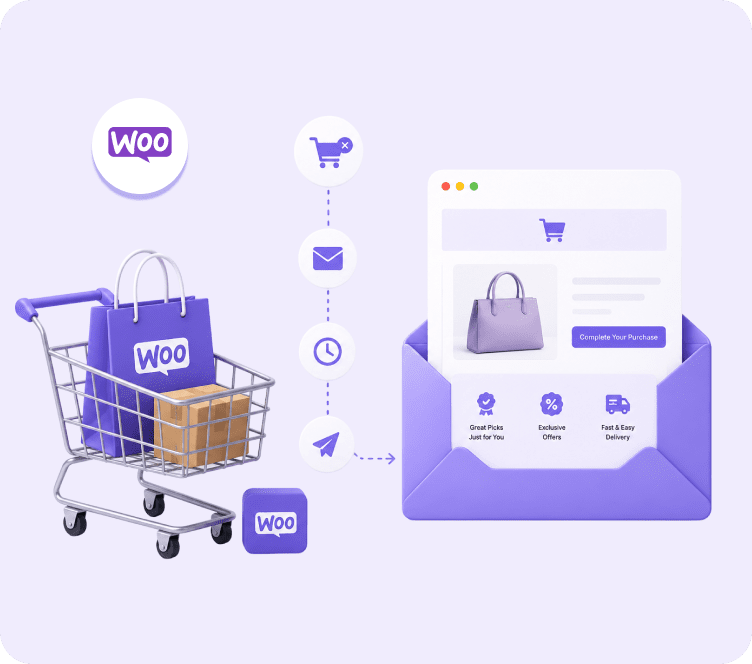
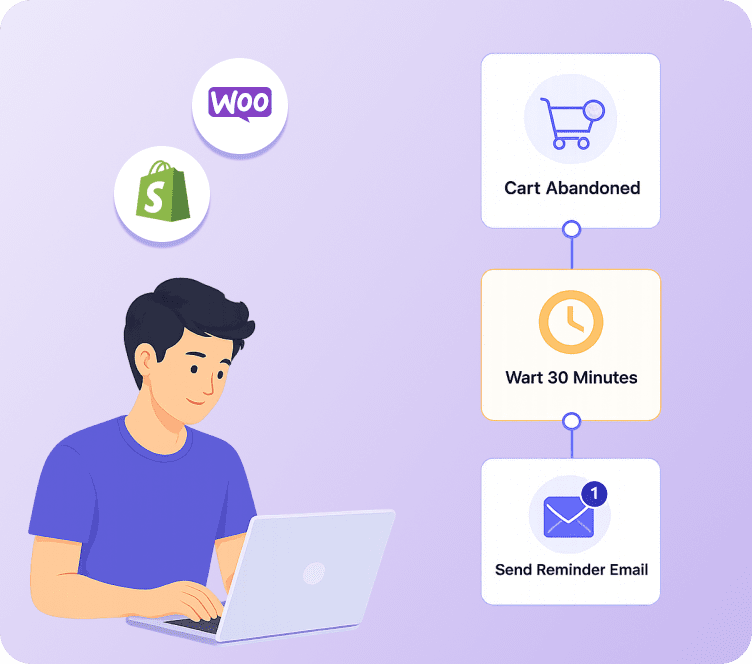
While this is often grouped under acquisition, returning customers abandon carts too. Sending a quick reminder with the exact product they viewed can recover otherwise lost repeat sales, the same logic used in cart recovery automations within Adflipr’s marketing automation workflows.
8. Customer Feedback and Review Request Emails
After a positive purchase experience, ask for a review. Customers who leave reviews are statistically more likely to purchase again because they feel emotionally invested in the brand.
Shopify Specific Retention Email Examples
Shopify stores have an advantage because customer and order data sync easily with most email tools.
Here is a practical Shopify example. A skincare brand on Shopify sets up the following automated flow:
- Day 0: Order confirmation
- Day 7: Post purchase check in email
- Day 30: Replenishment reminder based on product usage cycle
- Day 60: If no repeat purchase, send a win back email with a 10 percent discount
- Day 90: Final win back attempt with a stronger offer or asking for feedback on why they have not returned
This flow alone, when properly automated, can recover a meaningful percentage of one time buyers without any manual work.
WooCommerce Specific Retention Email Examples
WooCommerce stores often have access to deep plugin level data, which makes segmentation very precise.
Example flow for a WooCommerce furniture store:
- After purchase, tag the customer based on the product category bought, for example “living room” or “bedroom”
- Three weeks later, send an email recommending complementary products from the same category
- If customer engagement is high (opens, clicks), move them into a VIP segment
- If customer goes inactive for 75 days, trigger a win back sequence with social proof, like reviews from similar customers
The key with WooCommerce is using your plugin data fully instead of treating every customer the same. Good contact management makes this kind of tagging and grouping simple, even for stores with thousands of customers.
Revenue Focused Example: A Complete Retention Flow
Let us look at a realistic numbers based scenario.
A mid sized Shopify store with 5,000 past customers builds a basic retention flow:
- Post purchase email: 35 percent open rate, 4 percent click to repurchase
- Win back email (60 days inactive): sent to 1,200 inactive customers, 2.5 percent convert back into buyers
- Replenishment reminder: sent to consumable product buyers, 6 percent repurchase rate
Even with conservative numbers, this single retention setup can generate dozens of extra orders every month without spending a single rupee or dollar on new ad traffic.
This is the real value of retention strategies. They turn your existing customer list into an ongoing revenue source instead of a one time transaction.
Best Practices for Customer Retention Emails
- Segment customers based on real behavior, not guesses
- Personalize using actual purchase history, not generic templates
- Time your emails based on product usage cycles, not random schedules
- Keep subject lines simple and honest, avoid clickbait
- Always include a clear, single call to action
- Test send times and frequency, do not overwhelm your list
- Track repeat purchase rate and customer lifetime value as your main success metrics, not just open rates
- Use plain, friendly language, customers respond better to human tone than corporate language
- Pair customer loyalty emails with real rewards, not just generic thank you messages, so VIP customers actually feel the difference
Common Mistakes to Avoid
- Sending the same generic email to every customer regardless of purchase history
- Ignoring inactive customers instead of running win back campaigns
- Only using email for discounts, which trains customers to wait for sales instead of buying at full price
- Not setting up post purchase flows, missing the easiest retention opportunity, a basic post purchase email flow takes less than an hour to build and pays off for months
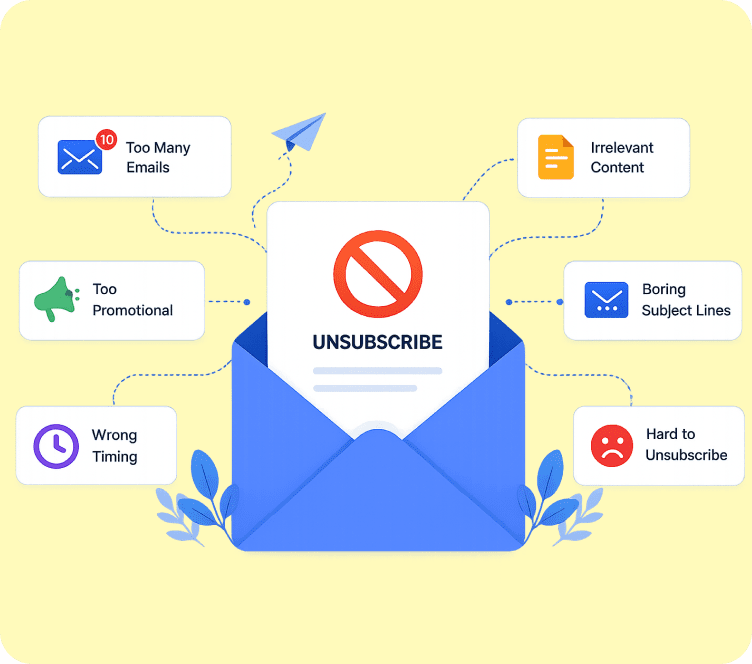
- Sending too many emails too quickly, causing unsubscribes
- Not tracking retention specific metrics like repeat purchase rate or churn rate
- Treating Shopify and WooCommerce customer data the same way without using platform specific tags and segments
How Adflipr Helps With Customer Retention
Adflipr is built specifically for Shopify and WooCommerce stores, which means retention automation is not an afterthought, it is core to how the platform works.
With Adflipr, store owners can:
- Use contact management to automatically segment customers based on purchase history, order frequency, and spending behavior
- Set up post purchase, win back, and replenishment flows through marketing automation without needing technical skills
- Design every retention email visually with the drag and drop email builder, no coding required
- Send and manage all of this through one email marketing platform built specifically for ecommerce
- Build customer segments for VIP rewards and loyalty campaigns
For stores that want a revenue focused approach to retention instead of generic email blasts, this kind of ecommerce specific automation makes the difference between a list that just sits there and a list that consistently brings back paying customers. This article on why email marketing still delivers strong ROI explains the bigger picture behind this shift.
Key Takeaways From This Blog
Here is what we have covered, so you can come back to this as a quick checklist:
- Retention emails are triggered by customer behavior, not sent randomly, this is what makes them work
- Post purchase follow ups are the easiest retention email to set up and often the most overlooked
- Win back campaigns can bring back customers who have gone quiet for 30, 60, or 90 days
- VIP and loyalty emails help your highest spending customers feel valued, which increases their spending further
- Replenishment reminders work especially well for consumable products like skincare, supplements, or pet food
- Shopify and WooCommerce both give you the data needed to build precise, behavior based flows
- Tracking repeat purchase rate and customer lifetime value matters more than just watching open rates
- Avoiding generic, one size fits all emails is just as important as sending the right ones, since this is one of the simplest ways to reduce customer churn over time
- Tools like Adflipr can automate most of this without needing a developer or a large team
Start with just one flow, a post purchase email or a basic win back sequence, and build from there. retention strategies do not need to be complicated to work, they just need to be consistent.
FAQs
What are customer retention email strategies?
Customer retention email strategies are automated, behavior based emails designed to keep existing customers engaged and encourage repeat purchases. They include post purchase follow ups, win back campaigns, replenishment reminders, and loyalty rewards, all triggered based on what a customer has actually done, not sent randomly to the whole list.
How do retention email strategies work?
They work by collecting customer data like purchase history and order frequency, segmenting customers into groups based on behavior, then triggering personalized emails automatically. For example, a customer inactive for 60 days might automatically receive a win back email with a relevant offer, without any manual work from the store owner.
Why is customer retention important for ecommerce stores?
Customer retention is important because acquiring a new customer is far more expensive than keeping an existing one. Returning customers also tend to spend more per order and trust the brand more. A solid customer retention email strategy turns your existing customer list into an ongoing, low cost revenue source.
What are the benefits of retention strategies?
Benefits include higher repeat purchase rate, increased customer lifetime value, lower dependence on paid ads, stronger brand loyalty, and better long term profitability. They also help identify VIP customers who can be rewarded to increase their spending even further.
What mistakes should I avoid with retention emails?
Avoid sending the same generic email to everyone, ignoring inactive customers, relying only on discounts, skipping post purchase flows, and sending too many emails too quickly. These mistakes reduce engagement and can lead to higher unsubscribe rates.
Is a customer retention email strategy worth it for Shopify stores?
Yes. Shopify stores have access to detailed purchase and customer data that makes building retention flows straightforward. Even a basic setup like post purchase emails and win back campaigns can noticeably increase repeat orders within a few months.
Is a customer retention email strategy useful for WooCommerce stores?
Absolutely. WooCommerce stores often have deep plugin level customer data, which allows for very precise segmentation. Store owners can tag customers by product category, purchase frequency, or spending level to build highly targeted retention campaigns.
How often should I send retention emails?
There is no fixed number, but most ecommerce stores find success sending 2 to 4 retention focused emails per month per customer segment, depending on the product type and purchase cycle. Consumable products may need more frequent replenishment reminders compared to durable goods.
What is a good repeat purchase rate to aim for?
This varies by industry, but many ecommerce brands aim for a repeat purchase rate between 20 to 30 percent as a healthy benchmark. Stores with strong retention email strategies often perform well above this range.
Can small ecommerce stores use these strategies?
Yes, retention strategies are not just for large brands. Even small Shopify or WooCommerce stores with a few hundred customers can set up basic automation like post purchase emails and win back flows, which often deliver a strong return relative to the low cost of running them.