
If you run a Shopify store, you already know the feeling. Your ad costs keep going up, but your new customer numbers barely move. iOS privacy changes, rising CPMs, and more competition on Meta and Google have made paid acquisition harder every single year. So the question every founder is asking right now is simple: how do you reduce customer acquisition costs without cutting your marketing budget to zero?
The answer isn’t to stop advertising. It’s to stop relying on ads alone. The smartest Shopify brands are using Shopify email marketing as their main lever to reduce customer acquisition costs, because email lets you turn expensive one-time clicks into repeat, low-cost revenue.
In this guide, we’ll break down exactly how CAC works, why email is the most reliable way to bring it down, and the specific automation flows that top Shopify stores use every day. We’ll also show you real numbers, common mistakes, and a simple framework you can apply this week.
What Is Customer Acquisition Cost and Why Is It Rising for Shopify Stores?
Customer acquisition cost (CAC) is the total amount of money you spend to get one new paying customer. It includes your ad spend, your marketing software, agency fees, and even staff time. If it costs you more to acquire a customer than that customer is worth, your business isn’t sustainable, no matter how many sales you’re making.
CAC has been rising across almost every Shopify niche for a few clear reasons:
- Apple’s privacy changes made ad targeting less accurate
- More brands are competing for the same ad inventory
- Ad platforms reward high budgets, which pushes up costs for smaller stores
- Customers now need more touchpoints before they trust a new brand
This is exactly why Shopify store owners can’t just throw more money at ads. You need a channel that gets cheaper the more you use it, and email marketing is that channel.
How to Calculate Your Customer Acquisition Cost Formula
The basic customer acquisition cost formula looks like this:
CAC = Total Marketing Spend ÷ Number of New Customers Acquired
For example, if your Shopify store spends 5,000 dollars on marketing in a month and gains 100 new customers, your CAC is 50 dollars per customer.
There are two versions worth tracking:
- Blended CAC: total marketing spend across every channel, divided by total new customers
- Paid CAC: only paid ad spend, divided by customers from paid channels
Tracking both numbers matters because it shows you exactly how much your free and low-cost channels, like email, are actually saving you.
Turn more visitors into paying customers, automatically
Set up abandoned cart recovery, welcome flows, and post-purchase emails in minutes, built specifically for Shopify and WooCommerce stores.
Why Email Marketing Helps You Reduce Customer Acquisition Costs Faster Than Ads
Once someone gives you their email address, reaching them again costs almost nothing. There’s no bidding war, no algorithm deciding whether your message gets seen, and no daily budget to manage. This is the biggest reason email marketing for eCommerce consistently delivers one of the highest returns of any marketing channel, often cited around 36 dollars back for every 1 dollar spent.
Here’s the practical impact on your CAC. Say a visitor clicks your Facebook ad but doesn’t buy. If you captured their email through a popup, that click isn’t wasted. You can keep marketing to them for free through email, and if they convert later, your original ad spend gets spread across more revenue, which lowers your effective CAC.
This is the mindset shift most Shopify brands miss. Reducing CAC isn’t only about cutting ad spend. It’s about making every dollar you already spent work harder, and email is the tool that does exactly that.
Build an Email List That Lowers Your CAC Before You Spend More on Ads
Every visitor who leaves your store without buying and without giving you their email is a fully wasted acquisition cost. That’s why list building has to be treated as seriously as your ad strategy.
A Shopify store converting even 5 to 10 percent of visitors into email subscribers creates a pool of future customers it can reach for free, again and again. Over time, this pool becomes cheaper than any paid channel.
Popup Forms and Exit-Intent Offers That Actually Convert
Simple, well-timed popups still outperform most fancy tactics:
- A welcome offer popup shown after 5 to 8 seconds on site
- An exit-intent popup that triggers when a visitor is about to leave
- A spin-the-wheel or gamified popup for stores that want higher opt-in rates
- A checkout page opt-in for customers who already trust you enough to buy
The goal is simple. Every visitor should have an easy, low-friction way to hand over their email in exchange for something useful, whether that’s a discount, free shipping, or early access to new products.
Turn more visitors into paying customers, automatically
Set up abandoned cart recovery, welcome flows, and post-purchase emails in minutes, built specifically for Shopify and WooCommerce stores.
Use Abandoned Cart Recovery Emails to Win Back Revenue You Already Paid For
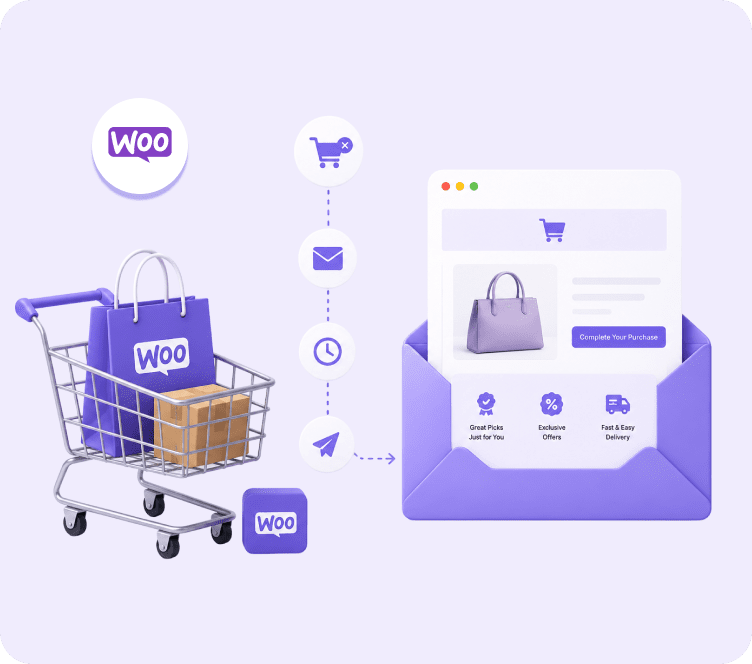
This is one of the highest-ROI automations any Shopify or WooCommerce store can run, and it directly reduces customer acquisition costs. You already paid to bring that visitor to your store. If they add a product to cart and leave, you don’t need to spend another rupee or dollar in ads to bring them back. You just need the right abandoned cart recovery sequence.
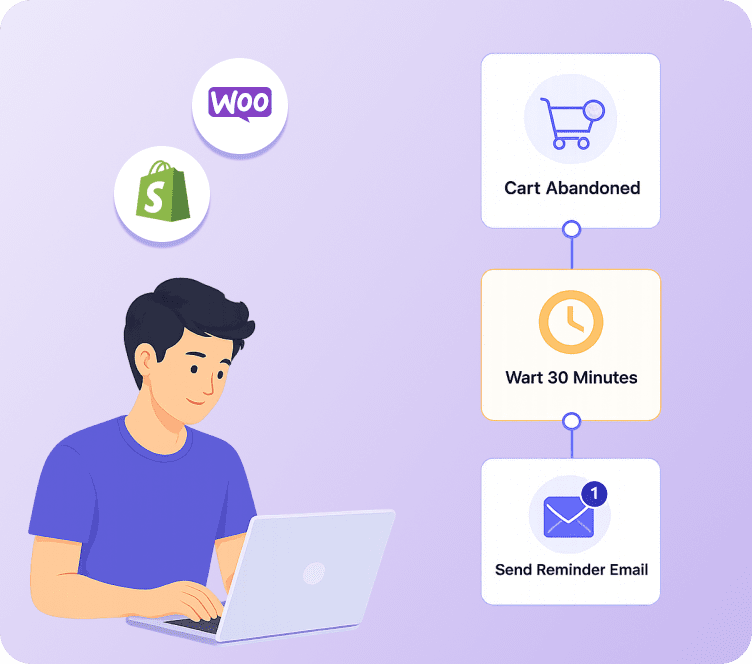
A simple, high-converting abandoned cart recovery flow looks like this:
- Email 1 (1 hour after abandonment): a friendly reminder showing the exact product left in cart
- Email 2 (24 hours later): answer common objections, add reviews or social proof
- Email 3 (48 to 72 hours later): a small incentive, like a limited-time discount or free shipping
Shopify stores running a 3-email abandoned cart sequence typically recover 10 to 15 percent of otherwise lost sales, all without any extra ad spend. That recovered revenue directly lowers your blended CAC because you’re getting more customers from the same original spend.
This is one of the core automations built into Adflipr’s abandoned cart recovery feature, designed specifically for Shopify and WooCommerce stores that want cart recovery running on autopilot without needing a developer to set it up.
Turn First-Time Buyers Into Repeat Customers with Post-Purchase Automation
Getting the first sale is the expensive part. Getting the second sale from the same customer is almost free, and it’s where most Shopify stores leave money on the table.
A strong post-purchase automation sequence should include:
- An order confirmation email that also cross-sells a related product
- A “how to use your product” email a few days after delivery
- A review request email once the product has likely arrived
- A replenishment or restock reminder for consumable products
- A win-back email if the customer hasn’t purchased again after 60 to 90 days
Every repeat purchase from this flow is essentially a customer you already paid to acquire, buying from you again for free. This is one of the fastest ways to reduce customer acquisition costs without touching your ad budget at all.
Segment Your Customers So Every Email Works Harder
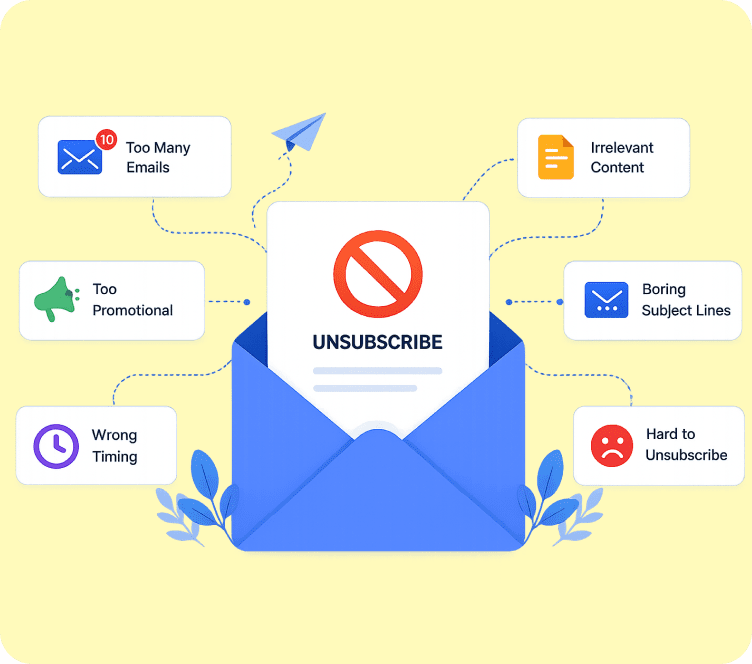
Sending the same email to your entire list wastes opens, clicks, and eventually, unsubscribes. Segmentation is what turns a generic email blast into a targeted, high-converting message that feels personal.
Useful segments for Shopify and WooCommerce stores include:
- First-time buyers vs repeat customers
- High-spend customers vs one-time discount shoppers
- Customers who browsed a category but didn’t buy
- Customers who haven’t purchased in 60, 90, or 120 days
- Customers who bought a specific product, for relevant upsells
When you personalize based on these segments, your open rates, click rates, and conversion rates all go up. That means more revenue from the same list size, which is another quiet way of reducing your effective CAC.
Increase Customer Lifetime Value to Make Every Acquisition Worth More
Reducing customer acquisition costs isn’t only about spending less. It’s also about making each customer worth more once you’ve acquired them. This is where customer lifetime value (CLV) comes in.
If your CAC is 40 dollars but your average customer only buys once and spends 45 dollars, you’re barely breaking even. But if that same customer buys three times over a year through email nurturing, your CLV might reach 150 dollars, making that same 40 dollar CAC extremely profitable.
The CLV to CAC Ratio You Should Be Aiming For
A healthy Shopify business generally aims for a CLV to CAC ratio of at least 3:1. That means every customer should be worth about three times what it costs to acquire them. If your ratio is closer to 1:1, it’s a clear sign you need stronger retention through email, not just a lower CAC number.
Email marketing automation is the most direct way to push this ratio up, because welcome series, post-purchase flows, and win-back campaigns all work to increase how often and how much a customer spends after that first sale.
Turn more visitors into paying customers, automatically
Set up abandoned cart recovery, welcome flows, and post-purchase emails in minutes, built specifically for Shopify and WooCommerce stores.
Real Example: How a Small Shopify Brand Lowered CAC Using Email Automation
Consider a mid-size Shopify skincare brand spending 8,000 dollars a month on Meta ads, acquiring 160 new customers, for a paid CAC of 50 dollars. After adding three automations, a welcome series, abandoned cart recovery, and a post-purchase flow, here’s what typically happens over 90 days:
- Email captures an extra 6 percent of site visitors as subscribers
- Abandoned cart recovery brings back 12 percent of otherwise lost carts
- The post-purchase flow drives a 20 percent increase in repeat purchase rate
None of this required extra ad spend. The same 8,000 dollar ad budget now supports more total revenue because email is converting visitors and past customers that ads alone would have wasted. The blended CAC, which includes this extra revenue, drops noticeably, often by 15 to 30 percent, without cutting the ad budget at all.
How Adflipr Helps You Reduce Customer Acquisition Costs
Most email tools are built for general marketing and then adapted for ecommerce later. Adflipr is built the other way around, every feature is designed specifically around Shopify and WooCommerce customer behavior, which is what makes it useful for lowering CAC rather than just sending newsletters.
Here’s how it actually helps:
- Abandoned cart recovery on autopilot: Adflipr’s abandoned cart recovery feature triggers personalized emails the moment a shopper leaves without buying, recovering sales from traffic you already paid for instead of needing a fresh ad click.
- Pre-built automation workflows: instead of building flows from scratch, Adflipr’s pre-built automations give you ready-to-launch welcome series, post-purchase follow-ups, and win-back sequences, so retention revenue starts flowing within minutes of setup, not weeks.
- Deep Shopify and WooCommerce integration: Adflipr syncs real order and customer data directly from your store, whether you’re on Shopify or WooCommerce, so every automation trigger is based on actual purchase behavior instead of guesswork.
- Segmentation built on real purchase data: because Adflipr pulls order history automatically, you can segment by spend, product, or purchase frequency without manually tagging contacts, which means more relevant emails and better conversion from the same list.
- Active contact billing: Adflipr charges based on active, engaged contacts rather than your total list size, so growing your list to reduce CAC doesn’t also quietly inflate your software costs the way it does on many other platforms.
Put together, these features attack CAC from both directions. You recover revenue you already paid for through cart recovery, and you increase what each customer is worth over time through post-purchase and win-back automation. That combination is what pulls blended CAC down without asking you to spend a single extra dollar on ads.
Best Practices to Keep Reducing Customer Acquisition Costs
- Track blended CAC and paid CAC separately every month
- Set up abandoned cart recovery before investing in any new ad channel
- Build a welcome series so new subscribers convert before they forget you
- Segment your list instead of sending one email to everyone
- Review your CLV to CAC ratio quarterly, not just once a year
- Use active contact based pricing tools so you’re not overpaying for an inactive list
- Test subject lines and send times, small gains compound over hundreds of emails
Common Mistakes That Keep CAC High
- Running ads without any email capture strategy in place
- Ignoring abandoned carts, which is one of the easiest wins available
- Sending generic emails to the entire list instead of segmenting
- Focusing only on new customer acquisition and ignoring repeat purchase rate
- Using an email tool that charges by total contacts instead of active contacts, which inflates costs as your list grows
- Not tracking CAC by channel, so you don’t know which spend is actually working
Key Take Aways
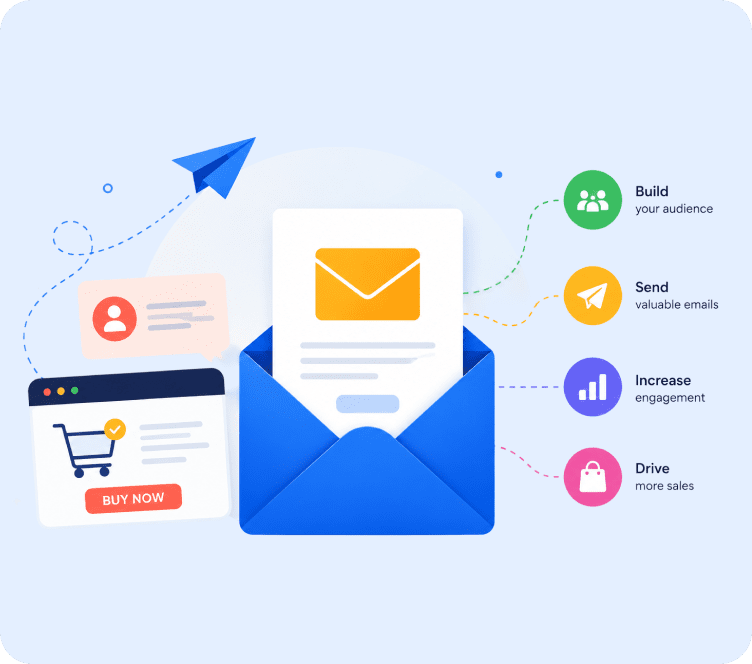
Reducing customer acquisition costs on Shopify doesn’t mean spending less on marketing. It means making sure every dollar you spend keeps working after the first click. Email marketing does exactly that, by capturing visitors before they leave, recovering abandoned carts, and turning one-time buyers into repeat customers who cost nothing to reach again.
If you want to reduce customer acquisition costs without cutting your ad budget, the fastest place to start is with automation: a strong welcome series, abandoned cart recovery, and post-purchase flows. Adflipr’s email marketing automation is built specifically for Shopify and WooCommerce stores that want these revenue-focused email journeys running automatically, with pricing based on active contacts instead of your entire list size.
Start with one automation this week. Abandoned cart recovery alone can start lowering your CAC within days.
FAQs
What is customer acquisition cost (CAC)?
Customer acquisition cost is the total amount of money a business spends to gain one new paying customer. It includes ad spend, marketing software, agency fees, and staff costs, divided by the number of new customers acquired in that period. Tracking CAC helps Shopify store owners understand whether their marketing spend is actually profitable.
How do I reduce customer acquisition costs on Shopify?
The most effective way to reduce customer acquisition costs on Shopify is to combine your ad strategy with owned channels like email marketing. Capturing emails through popups, recovering abandoned carts, and automating post-purchase flows all increase revenue from the same ad spend, which lowers your blended CAC over time.
Why is email marketing important for reducing CAC?
Email marketing is important because reaching a subscriber again costs almost nothing compared to running another ad. Once you’ve captured an email, you can market to that person indefinitely for free, which spreads your original acquisition cost across more purchases and lowers your CAC per customer.
What is a good customer acquisition cost formula to use?
The standard customer acquisition cost formula is total marketing spend divided by the number of new customers acquired in the same period. Many Shopify stores track this in two ways, blended CAC across all channels and paid CAC from advertising only, to see which channels are actually efficient.
How does abandoned cart recovery help reduce customer acquisition costs?
Abandoned cart recovery emails bring back visitors who already clicked your ad and almost bought. Since you already paid to acquire that visitor, recovering the sale through email costs nothing extra. This directly increases the number of paying customers from the same ad budget, lowering your overall CAC.
Is Shopify email marketing worth it for small stores?
Yes. Shopify email marketing is especially valuable for small stores because it requires a lower budget than paid ads and delivers a strong return, often cited around 36 dollars for every 1 dollar spent. Small stores can start with a welcome series and abandoned cart flow and see results within the first few weeks.
What mistakes should I avoid when trying to lower CAC?
Common mistakes include running ads without any email capture strategy, ignoring abandoned carts, sending the same email to your entire list without segmentation, and using email tools priced by total contacts instead of active contacts, which quietly increases costs as your list grows.
How quickly can email marketing reduce customer acquisition costs?
Many Shopify stores see measurable results within 30 to 90 days of setting up core automations like a welcome series, abandoned cart recovery, and post-purchase flows. Abandoned cart recovery specifically tends to show results within the first couple of weeks since it targets warm, high-intent visitors.