
You already have an email list. The question is whether it’s making you money or just sitting there.
Most store owners send the occasional promo email and call it a day. But the brands that consistently grow their revenue without spending more on ads are doing something different. They’re using drip email marketing in the background, quietly turning browsers into buyers, one-time buyers into repeat customers, and abandoned carts into completed orders. And the best part is that once it’s set up, it keeps generating sales automatically, day and night, without you writing a single extra email.
If you’ve heard the term but never actually set it up, this guide will change that. We’ll cover what it is, how it’s different from your regular newsletter, a real comparison of manual vs automated sending, and the exact campaigns every Shopify or WooCommerce store should have running right now.
What Is Drip Email Marketing?
it is the practice of sending a series of automated emails to a subscriber or customer based on a specific trigger, like joining your list, abandoning a cart, or making a purchase. Instead of one big email blast, the emails go out one at a time over a set schedule, each one building on the last. This kind of sequence is often called a drip email campaign, or sometimes an email drip sequence.
Think of it like water dripping steadily from a tap instead of one bucket dumped all at once. That’s where the name comes from.
The key difference between this approach and regular email marketing is timing and personalization. A regular campaign email goes out to your whole list at once, usually tied to a date like a sale or product launch. An automated email campaign is tied to a person’s behavior instead, and it keeps working for you 24 hours a day without you touching it again once it’s set up.
How Drip Email Marketing Differs From a Regular Email Blast
A newsletter blast is one email, sent once, to everyone at the same time. A well built email drip sequence runs gradually, reaching the specific people who took a specific action. One is a single message. The other is a conversation that unfolds over days or weeks.
Turn more visitors into paying customers, automatically
Set up abandoned cart recovery, welcome flows, and post-purchase emails in minutes, built specifically for Shopify and WooCommerce stores.
Why It Matters for Ecommerce Stores
If you’re running a Shopify or WooCommerce store, here’s the honest truth: most of your visitors don’t buy on the first visit. A good portion sign up for your list but never come back. Others add products to cart and get distracted. And plenty buy once and never return.
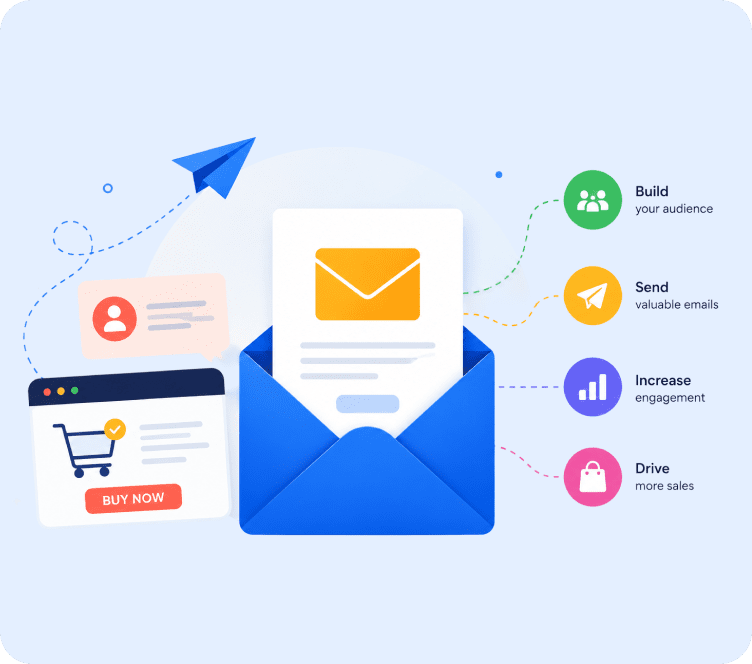
Drip email marketing closes those gaps automatically. Instead of losing that revenue, you recover a meaningful chunk of it without hiring more staff or spending more on ads. Done right, it’s one of the easiest ways to boost sales on autopilot while you focus on running the rest of your store.
If you want to go deeper on the strategy side, check out our email marketing blog for more ecommerce specific tips.
A few reasons this matters more for ecommerce than any other industry:
- Cart abandonment rates average around 70 percent across online stores, which means most of your potential revenue is sitting unclaimed in abandoned checkouts.
- Repeat customers spend more per order than first time buyers, and a post purchase drip email campaign is how you turn a one time sale into a repeat one.
- An automated email campaign consistently outperforms one time email blasts on open rates, click rates, and revenue per email sent, since the message matches exactly where the customer is in their journey.
This is exactly why platforms like Adflipr are built specifically around ecommerce email automation instead of generic email sending. Whether you need Shopify email marketing or WooCommerce email marketing, connecting your store data means you can trigger emails based on real purchase behavior instead of guessing.
How it Works (Step by Step)
Every drip email campaign runs on three moving parts. Once you understand these, building your own with a marketing automation tool becomes much easier.
1. The Trigger
This is the action that starts the sequence. Common ecommerce triggers include:
- Subscribing to your newsletter
- Adding a product to cart without buying
- Completing a purchase
- Browsing a product page without adding to cart
- Reaching a certain number of days without ordering again
2. The Sequence
Once triggered, a set number of emails go out over a defined period. A welcome series might be 3 emails over 7 days. An abandoned cart sequence might be 3 emails over 48 hours. The spacing depends on your goal and how urgent the action is.
3. The Personalization
Each email in the sequence pulls in real data, like the customer’s name, the exact product they viewed, or their past order history. This is what separates a real drip marketing strategy from a plain autoresponder. The content feels relevant because it’s built around that specific person’s behavior.
Turn more visitors into paying customers, automatically
Set up abandoned cart recovery, welcome flows, and post-purchase emails in minutes, built specifically for Shopify and WooCommerce stores.
Manual Email Marketing vs Automated Drip Campaigns
This comparison is where most store owners realize how much time and revenue they’re leaving on the table.
| Factor | Manual Email Sending | Automated Drip Campaign |
|---|---|---|
| Setup effort | Low upfront, but repeated every time | Higher upfront, built once |
| Ongoing effort | You write and send every email manually | Runs on its own after setup |
| Timing accuracy | Depends on when you remember to send | Triggered instantly based on customer action |
| Personalization | Limited, usually generic to whole list | Based on individual behavior and purchase data |
| Scalability | Breaks down as your list grows | Scales to thousands of customers with no extra work |
| Revenue recovery | Missed abandoned carts, no follow up | Recovers carts, upsells, and win-backs automatically |
| Consistency | Inconsistent, depends on your schedule | Sends the same quality experience every time |
| Best for | Very small lists, early testing | Any store that wants to grow without more manual work |
The honest answer is that manual sending works fine when you have 50 subscribers and time to spare. It stops working the moment your list grows past a few hundred contacts, because you simply cannot personalize and time hundreds of individual emails by hand.
This is the exact gap that ecommerce email automation is built to close. A platform like Adflipr lets you build the sequence once, connect it to your Shopify or WooCommerce store, and let it run permanently in the background while you focus on the rest of your business.
6 Drip Marketing Campaigns Every Shopify & WooCommerce Store Needs
Not every drip email campaign serves the same purpose. Here are the six that consistently produce the best return for ecommerce stores.
1. Welcome Series
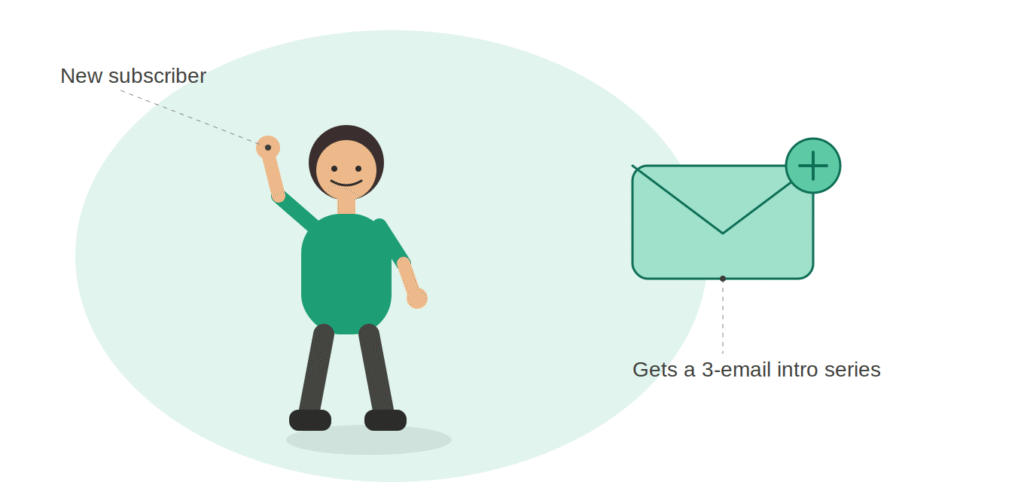
Triggered the moment someone joins your list. Introduce your brand, share your story, and offer a small incentive like a first order discount. A Shopify store selling skincare might send 3 emails: brand introduction, best sellers, and a 10 percent discount reminder. This is a great starting point for Shopify email marketing since it’s simple to set up and shows results fast.
2. Abandoned Cart Sequence
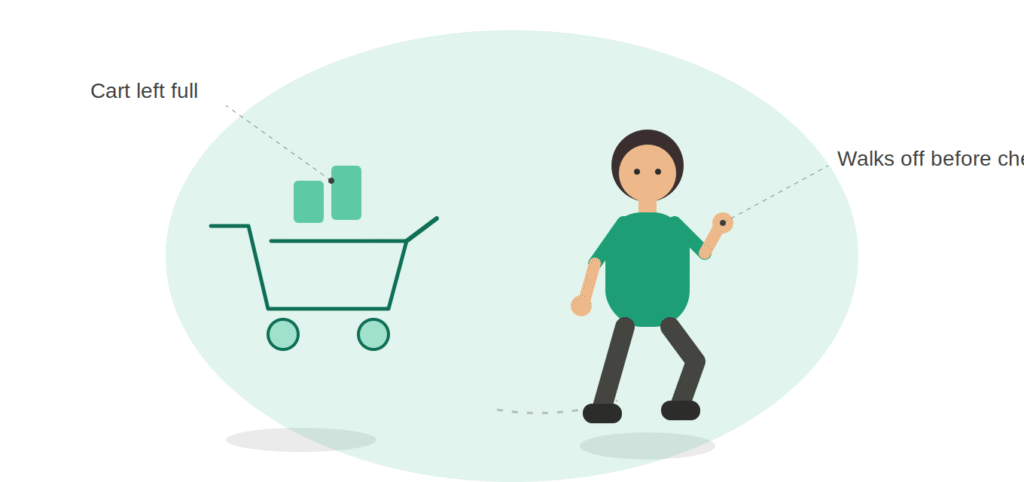
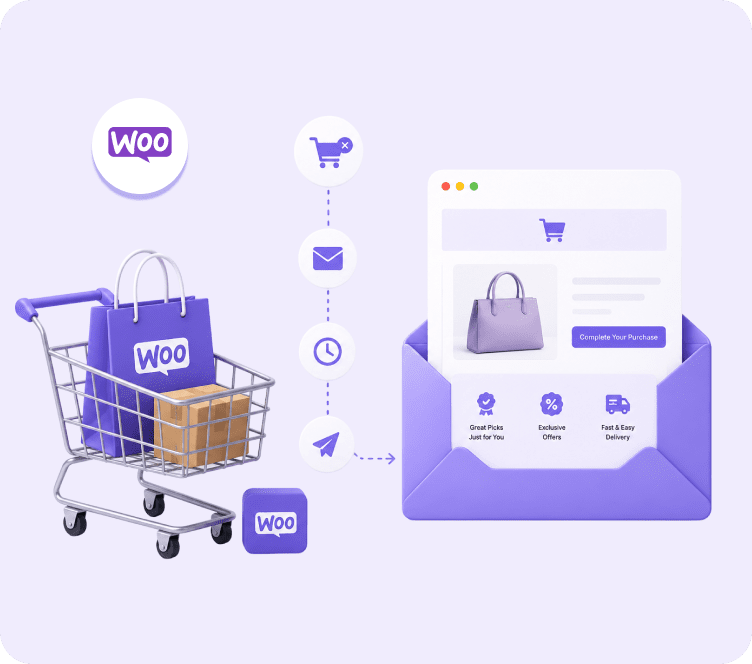
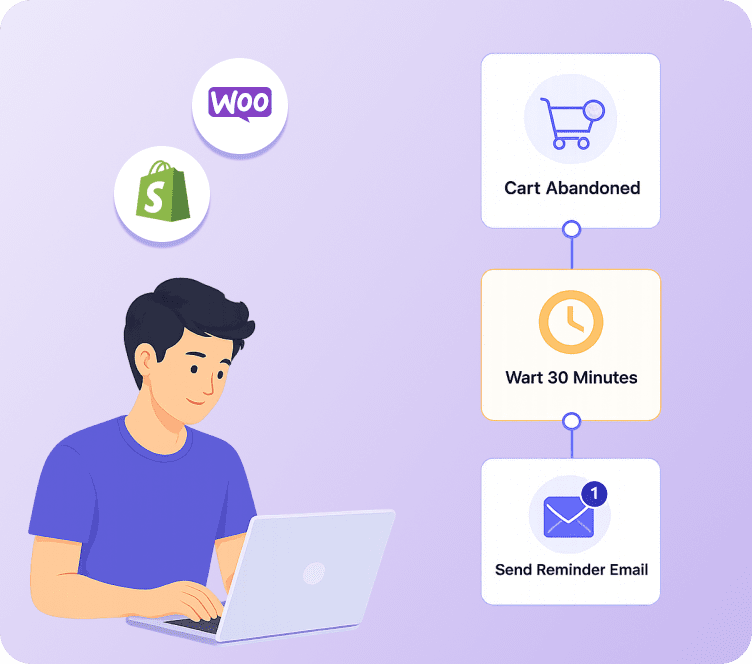
Triggered when a shopper adds items to cart but doesn’t check out. This is usually the single highest converting campaign in any drip marketing strategy. A typical sequence is a reminder email after 1 hour, a second email with social proof after 24 hours, and a final email with a small incentive after 48 hours. Our abandoned cart recovery feature handles this automatically once it’s connected to your store, and you can find more abandoned cart email tips on our blog.
3. Browse Abandonment
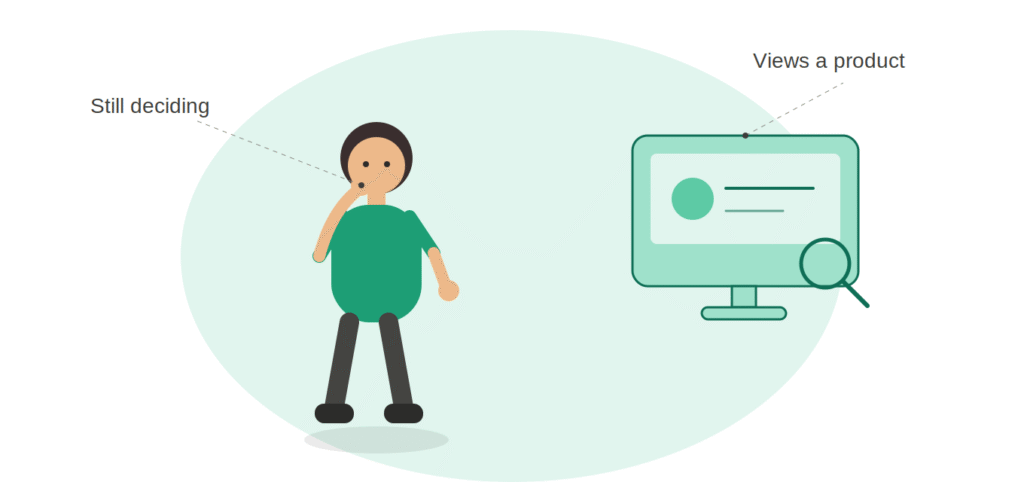
Triggered when someone views a product but doesn’t add it to cart. Softer than a cart abandonment email, this simply reminds them what they looked at and highlights related products.
4. Post Purchase Sequence
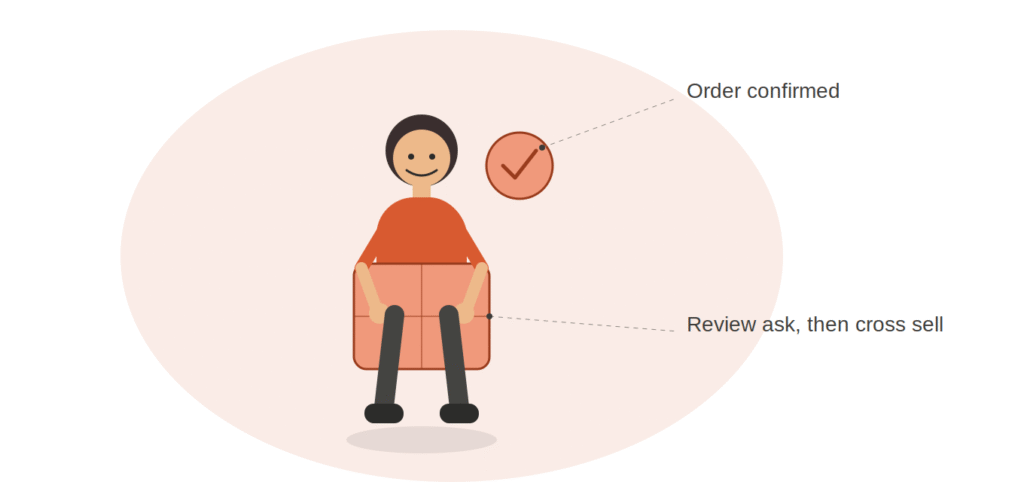
Triggered right after checkout. This includes the order confirmation, a shipping update, a request for a review, and eventually a cross sell email suggesting complementary products. A WooCommerce store selling coffee equipment might follow up two weeks later with a “how to use your grinder” tip, then a reorder reminder for beans, a solid example of WooCommerce email marketing done right.
5. Win Back Campaign
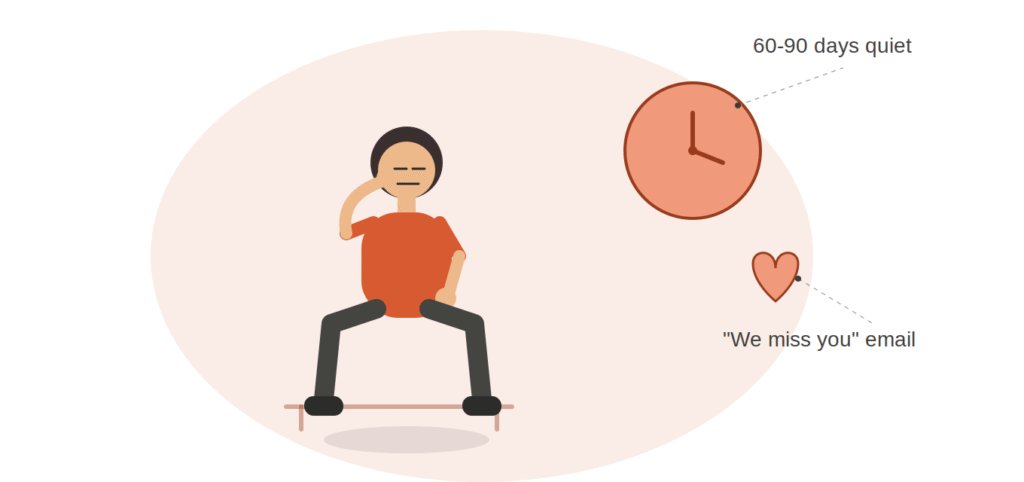
Triggered when a customer hasn’t purchased in a set number of days, often 60 or 90. These emails re-engage lapsed customers with a “we miss you” message and sometimes a returning customer discount.
6. Replenishment Reminder
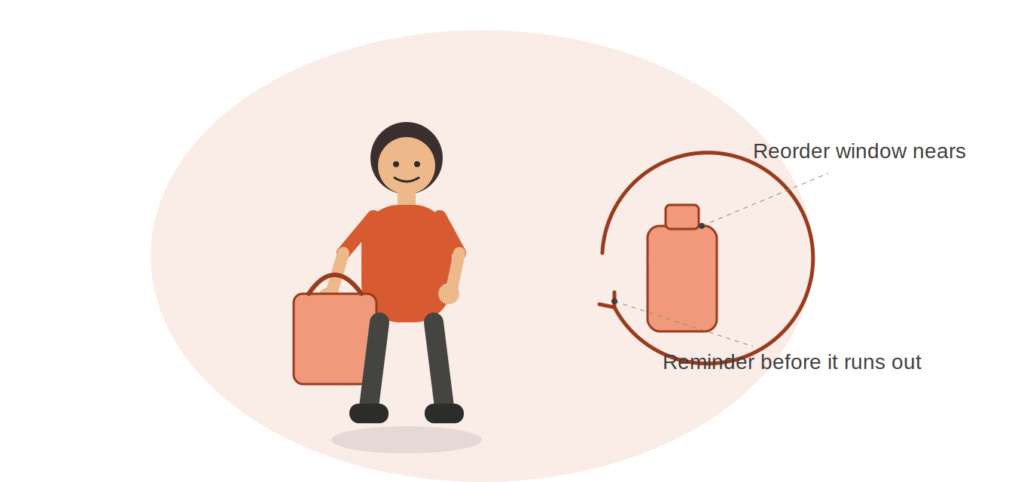
Triggered based on average time between repeat orders for consumable products. If your average customer reorders supplements every 30 days, a reminder email at day 25 keeps them from switching to a competitor.
How to Set Up it for Your Store
Here’s the practical, no fluff process for setting one up.
Step 1: Pick your trigger. Start with abandoned cart if you haven’t built any drip campaigns yet, since it usually has the fastest and clearest return.
Step 2: Map your sequence. Decide how many emails, and how much time between each one. Three emails over two to three days is a solid default for cart recovery.
Step 3: Write emails that stand alone. Someone might only open the second email, not the first. Make sure each one makes sense without needing the previous message for context. Our drag and drop email builder makes this step quick even if you’ve never designed an email before.
Step 4: Set your conditions. Make sure the sequence stops automatically if the customer completes the purchase, so you’re not emailing someone about a cart they already checked out.
That’s it. Four steps, not a checklist of ten. If you’re setting this up for a Shopify or WooCommerce store, connecting your store data is part of onboarding onto your email platform, not a separate step in building the campaign itself, and a tool like Adflipr handles that sync automatically once your store is linked.
This is where a tool built specifically for Shopify and WooCommerce, like Adflipr, saves real time. Instead of manually building product blocks or exporting order data, the store connection pulls everything in automatically, so your abandoned cart emails always show the exact product someone left behind. Once your campaign is live, keep an eye on open rates and revenue per email so you know what to tweak, but that’s ongoing maintenance, not part of the setup itself.
Best Practices for Drip Email Marketing
- Keep each email focused on one clear goal, not five different messages crammed into one email.
- Use real customer data like first name, product viewed, or order history to make every email feel personal.
- Space your emails based on urgency. Cart abandonment moves fast, win back campaigns can move slower.
- Always include a clear, single call to action per email.
- Segment your list so a first time visitor and a loyal repeat customer never get the exact same welcome sequence.
- Review performance every month and adjust timing or subject lines based on what the data shows.
Common Mistakes to Avoid
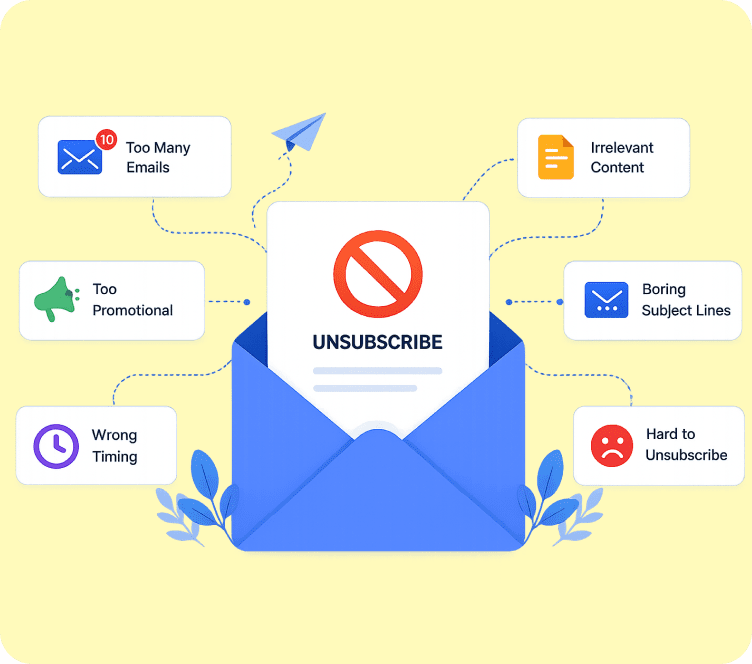
- Sending too many emails too fast. Three emails crammed into six hours feels like spam, not a helpful reminder.
- Never stopping the sequence after conversion. Nothing damages trust faster than getting a cart reminder for something you already bought.
- Treating every subscriber the same. An automated email campaign without segmentation is just a slower version of a generic blast.
- Ignoring mobile formatting. Most ecommerce emails are opened on a phone first, so test every email on mobile before it goes live.
- Setting it once and forgetting it. Drip email marketing is not “set and forget forever.” Revisit your sequences every few months as your products and offers change.
- Skipping the personalization setup. Sending an abandoned cart email without showing the actual product image and name significantly lowers click through rates.
Real Revenue Examples
A Shopify apparel store running a 3 email abandoned cart sequence recovered close to 12 percent of abandoned carts that would have otherwise been lost completely. That’s revenue that required zero extra ad spend to capture, a strong case for Shopify email marketing done through automation.
A WooCommerce supplement store running a replenishment reminder drip campaign saw a noticeable lift in repeat purchase rate within the first two months, simply because customers were reminded to reorder before they ran out and considered switching brands. It’s a simple example of what WooCommerce email marketing can do when it’s tied to real purchase data.
These aren’t unusual results. They’re what happens when a drip marketing strategy replaces guesswork with timing based on actual customer behavior. It’s not a buzzword, it’s one of the most reliable ways to recover lost revenue and keep customers coming back without constantly increasing your ad budget.
This lines up with what actual store owners report too. Mangove Living, a Shopify store, shared in a review on the Shopify App Store that setting up email flows through Adflipr was straightforward, and they noticed real improvement in both engagement and abandoned cart recovery after switching. They also mentioned being able to track which purchases came directly from email and cart recovery flows, which gave them a clearer picture of what was actually working.
Start small. Pick one campaign, most likely abandoned cart recovery, get it running, and expand from there once you see the results. If you’re running a Shopify or WooCommerce store and want a platform built specifically for ecommerce automation, with pricing based on active contacts rather than your full list size, Adflipr is worth a look for setting up your first drip email marketing campaign the right way.
Turn more visitors into paying customers, automatically
Set up abandoned cart recovery, welcome flows, and post-purchase emails in minutes, built specifically for Shopify and WooCommerce stores.
Most People Asking About
What is drip email marketing?
It is the practice of sending a series of automated emails to a subscriber or customer over time, triggered by a specific action like signing up, abandoning a cart, or completing a purchase. Each email is sent in sequence rather than all at once, and the content is personalized based on the recipient’s behavior.
How is It different from a regular email blast?
A regular email blast goes out to your entire list at the same time, usually tied to a date. Email marketing, on the other hand, is triggered by individual customer behavior and unfolds gradually over days or weeks, making it far more personalized and timely.
Why is it important for ecommerce stores?
Most ecommerce visitors don’t buy on their first visit, and cart abandonment rates average around 70 percent. It automatically follows up with these visitors and customers, recovering lost sales and encouraging repeat purchases without extra manual work.
Is email marketing worth it for Shopify stores?
Yes. Shopify stores that connect their store data to drip marketing, especially for abandoned carts and post purchase follow ups, typically see meaningful revenue recovery within the first few weeks, since the emails include real product data automatically.
Is drip email marketing useful for WooCommerce stores?
Yes, and it’s often underused on WooCommerce compared to Shopify. WooCommerce stores can connect order and customer data to trigger the same kind of abandoned cart, post purchase, and replenishment campaigns that larger platforms rely on.
What mistakes should I avoid with drip email marketing?
The most common mistakes are sending emails too close together, forgetting to stop the sequence after a purchase, skipping segmentation, and not personalizing emails with real product or order data. Each of these reduces performance and can annoy subscribers.
How many emails should be in a drip email campaign?
Most ecommerce drip campaigns work well with 3 to 5 emails. Abandoned cart sequences typically use 3 emails over 24 to 72 hours, while welcome series can extend to 4 or 5 emails over one to two weeks.