
If you run a Shopify store, chances are you already know email marketing matters. Every guide, every app listing, every “growth hack” thread tells you the same thing: email is one of the highest ROI channels in ecommerce. But “it matters” is not the same as knowing how it actually works, what to set up first, which flows actually move revenue, or which tool fits a store your size.
Most beginner guides either oversimplify this into “just send more emails” or jump straight into advanced automation jargon without ever explaining the basics. The result is a lot of Shopify store owners who know email marketing is important but have no real plan, no flows running, and no idea where to even start.
This guide is built to fix that gap, in plain language, with no fluff.
What You’ll Learn From This Guide:
- What Shopify email marketing actually is and how it works behind the scenes
- The core email flows every Shopify store should set up first
- How to build a simple strategy before touching any tool
- What to look for in software
- How Adflipr compares to tools like Mailchimp, Klaviyo, Brevo, and MailerLite
- Best practices and common mistakes to avoid
- Quick answers to the most common questions store owners ask
Think of this as the foundation piece. If you are new to email marketing on Shopify, or you have been doing it without a clear plan, this guide gives you the full picture before you dive into more specific strategies.
What Is Shopify Email Marketing and Why It Matters
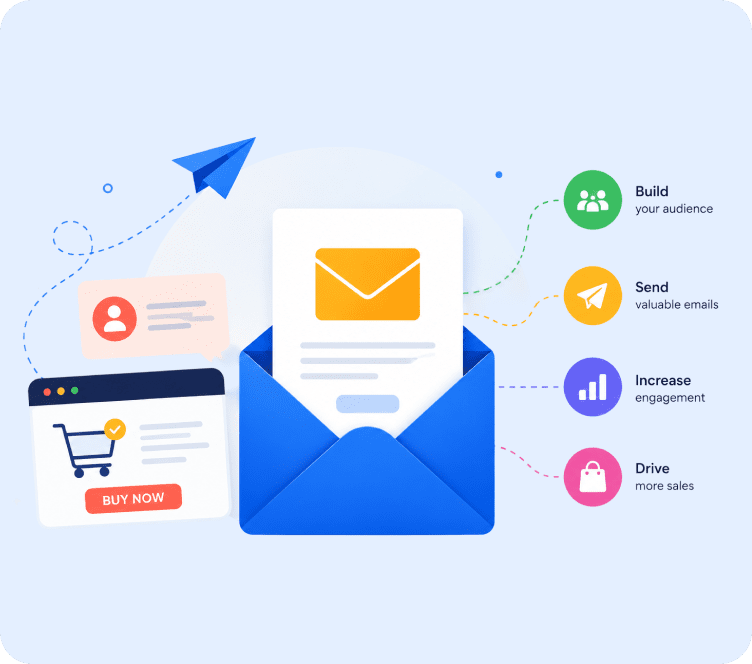
Email marketing is the practice of using email to attract, convert, and retain customers for a store built on the Shopify platform. It covers everything from welcome emails for new subscribers to abandoned cart recovery, post-purchase follow-ups, and win-back campaigns for customers who have gone quiet.
Here is why it matters more than most store owners realize. Email marketing consistently delivers one of the highest returns on investment of any marketing channel for ecommerce, often cited around 36 to 42 dollars back for every dollar spent. Paid ads keep getting more expensive. Organic reach on social media keeps shrinking. Your email list is the one channel you fully own.
For a Shopify store specifically, this matters even more because Shopify gives you direct access to customer data: purchase history, browsing behavior, cart activity, and product preferences. That data is what makes email marketing for Shopify stores so much more powerful than generic email marketing. You are not guessing what someone wants. You already know.
How Email Marketing Works
At a basic level, It works through three layers working together.
1. Data collection. Your Shopify store tracks what people browse, add to cart, buy, and ignore. A good email marketing software for Shopify pulls this data automatically.
2. Automated flows. Instead of manually emailing every customer, automation workflows trigger emails based on behavior. Someone abandons a cart, they get an email. Someone makes their first purchase, they get a different email. This is where most of the revenue actually comes from.
3. Campaigns. These are the one-time sends, like a new product launch, a flash sale, or a seasonal promotion sent to a chosen segment of your list.
Most stores get this backwards. They focus heavily on campaigns and barely touch automation, when in most stores, Shopify email automation generates more revenue per email sent than broadcast campaigns ever will.
Building Your Email Marketing Strategy
Before touching any tool, you need a strategy. Sending random emails with no plan is one of the fastest ways to burn your list and tank your deliverability.
Step 1: Map the Customer Journey
Think through every stage a customer goes through:
- Someone signs up but has not bought yet
- Someone adds to cart but does not check out
- Someone just made their first purchase
- Someone is a repeat customer
- Someone has not purchased in 60+ days
Each stage needs a different email approach. A first-time visitor needs trust-building content. A loyal repeat buyer needs early access and appreciation, not a generic discount blast.
Step 2: Set Goals for Each Flow
Do not just say “increase sales.” Set specific goals like:
- Reduce cart abandonment rate by 15 percent
- Increase repeat purchase rate within 90 days
- Recover 10 percent of lost revenue from abandoned carts
Step 3: Choose the Right Software
This is where a lot of stores get stuck. Picking the wrong tool means either overpaying for features you do not use, or being limited by a tool that cannot handle ecommerce-specific automation properly. We will cover exactly what to look for, and which tools fit which needs, later in this guide.
Must-Have Shopify Email Flows (Quick Overview)
Once your store has the basics in place, these are the Shopify email flows worth setting up first. Each one plays a different role, so think of this as a map, not a deep dive into every single one.
1. Welcome Series
This is the first impression. A strong welcome series should:
- Thank the subscriber and set expectations
- Share your brand story briefly
- Offer a first-purchase incentive if appropriate
- Introduce best-selling products
Example: A skincare brand sends a 3-email welcome series. The first email introduces the brand and ingredients philosophy. Customer reviews get highlighted in the second one. A 10 percent first-order discount closes out the third. This single flow often becomes one of the highest-converting sequences in the entire account, since it reaches people while their interest is freshest.
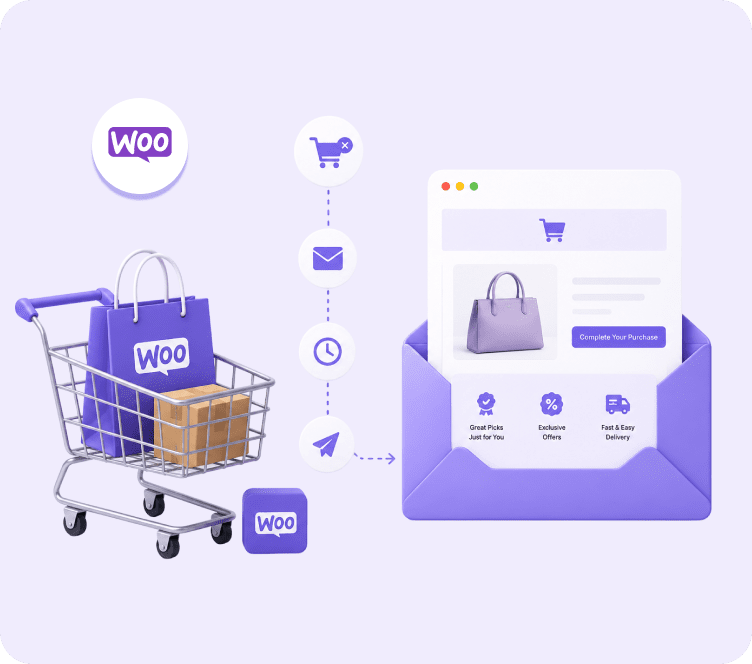
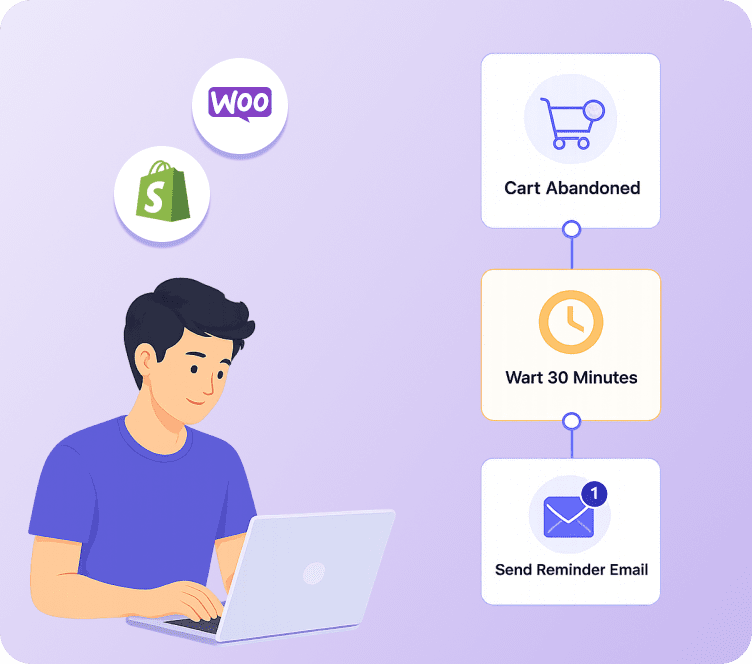
2. Shopify Abandoned Cart Emails
Cart abandonment is the single biggest revenue leak in ecommerce. On average, around 70 percent of carts are abandoned before checkout. Shopify abandoned cart emails are designed to win back as much of that lost revenue as possible.
A solid abandoned cart sequence:
- Email 1: Sent within 1 hour, simple reminder
- Email 2: Sent at 24 hours, address objections (shipping cost, sizing, etc.)
- Email 3: Sent at 48 to 72 hours, small incentive if needed
Shopify example: A home decor Shopify store added a three-email abandoned cart sequence and recovered an additional 8 percent of otherwise lost orders within the first month, without changing anything else in their funnel.
3. Browse Abandonment
For visitors who looked at products but did not add to cart. Lighter touch than cart abandonment, usually just one or two emails.
4. Post-Purchase, Win-Back, and Loyalty Flows
These three flows are where most of your repeat revenue eventually comes from, but they deserve more space than a quick overview can give them. Shopify post-purchase emails, win-back sequences for inactive customers, and VIP or loyalty rewards each have their own timing, copy, and segmentation logic. For a full breakdown with real examples and numbers, this guide on customer retention email strategies covers all three in depth.
For now, just know that these flows exist and that they sit one layer above the basics covered in this guide.
Segmentation: The Part Most Stores Skip
Sending the same email to your entire list is one of the biggest reasons open rates and conversions stay low. Segmentation means dividing your list into smaller groups based on behavior, so each group gets relevant content.
Useful segments for any Shopify store:
- First-time buyers vs repeat buyers
- High spenders vs low spenders
- Engaged subscribers vs inactive subscribers
- Product category interest
- Customers near a replenishment cycle (consumables, supplements, etc.)
A simple example: a coffee subscription brand segmented customers by how often they reorder. Customers nearing their typical reorder window received a “running low?” reminder email. That single segment alone produced one of their highest revenue-per-email numbers across the whole account.
Real-World Examples of Email Marketing in Action
| Store Type | What They Set Up | What It Taught Them |
|---|---|---|
| Shopify apparel brand | Welcome series with a first-order discount | New subscribers converted faster when the brand story came before the discount, not after |
| Shopify skincare store | Abandoned cart sequence (3 emails) | Most recovered sales came from the second email, not the first |
| Shopify pet supplies brand | Basic segmentation by purchase category | Sending fewer, more relevant emails outperformed sending more generic ones |
| Shopify home goods store | A/B test on subject lines | Curiosity-based subject lines outperformed discount-first subject lines for this audience |
These examples are less about chasing one big number and more about understanding how each piece of email marketing behaves once it is actually running.
Best Practices for Email Marketing
- Personalize beyond the first name. Use purchase history and browsing behavior, not just “Hi [Name].”
- Keep subject lines specific. “Your cart is waiting” outperforms vague lines like “Don’t miss out.”
- Test send times. Email deliverability and open rates vary by audience, so A/B testing send times matters more than people assume.
- Clean your list regularly. Inactive subscribers hurt your deliverability and inflate your costs on tools that bill by total contacts.
- Match email frequency to your niche. A daily deals store can email often. A premium furniture brand cannot.
- Use plain text style sections. Highly designed emails are not always better. Simple, conversational emails often outperform heavily branded templates.
Common Mistakes to Avoid
- Only sending campaigns, no automation. Automation runs 24/7 and usually drives more revenue per email than one-time campaigns.
- Ignoring mobile design. Most ecommerce emails are opened on mobile. Test every email on a phone before sending.
- Treating every subscriber the same. No segmentation means lower relevance and lower conversions.
- Paying for unengaged contacts. Many email marketing software for Shopify stores charge based on total list size. This gets expensive fast if you are not actively cleaning your list.
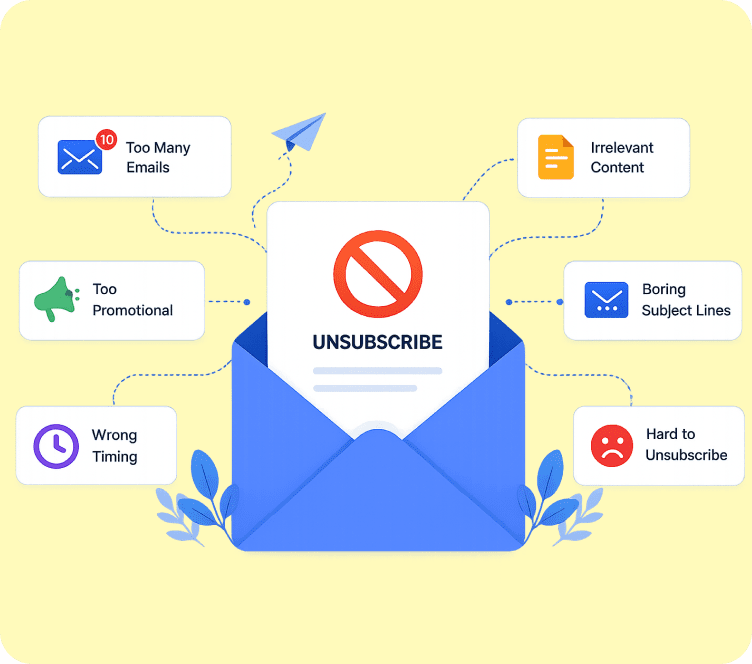
- Not testing subject lines. Small tweaks in subject lines can shift open rates significantly, but only if you actually test them.
What to Look For in Software
A lot of store owners search for “best email marketing app for Shopify” without knowing what actually separates a good one from a generic tool. Here is the real checklist:
- Native Shopify integration, not a generic connector that only syncs basic contact info
- Pre-built ecommerce automation templates (cart recovery, post-purchase, win-back)
- Behavior-based segmentation out of the box, not a manual spreadsheet process
- Pricing based on active, engaged contacts rather than total list size
- A visual, drag and drop builder that does not require a developer
- Clear analytics tied to revenue, not just opens and clicks
Many Shopify stores start with Shopify’s own built-in Email app, which is fine for basic newsletters but limited once you need multi-step automation, deeper segmentation, or abandoned cart sequences with more than one email. That is usually the point where stores start comparing dedicated platforms like Mailchimp, Klaviyo, Brevo, and MailerLite.
How Adflipr Helps Shopify Stores With Email Marketing
Adflipr is built specifically for Shopify and WooCommerce stores, which means every feature is designed around ecommerce behavior instead of being adapted from a generic email tool. Here is what that looks like in practice:
- Email Marketing: Create and send campaigns and automated emails from one place, built around Shopify customer and order data.
- Marketing Automation: Set up multi-step journeys like welcome series, abandoned cart sequences, and win-back flows using pre-built automation templates instead of building logic from scratch.
- Abandoned Cart Recovery: Track and recover abandoned carts automatically, with sequences timed for when Shopify shoppers are most likely to come back and complete checkout.
- Contact Management: Organize and segment your Shopify customers by purchase history, spend, and activity level without needing a separate CRM.
- Drag and Drop Email Builder: Design custom emails visually, no coding or developer needed.
- Analytics & Reporting: See which flows and campaigns are actually driving revenue, not just opens and clicks.
How Adflipr Compares to Other Email Marketing Tools for Shopify
| Feature | Adflipr | Mailchimp | Klaviyo | Brevo | MailerLite |
|---|---|---|---|---|---|
| Built for ecommerce specifically | Yes | No, general purpose | Yes | No, general purpose | No, general purpose |
| Native Shopify integration | Yes | Limited | Yes | Limited | Limited |
| Pricing based on active contacts | Yes | No, total contacts | No, total contacts | No, total contacts | No, total contacts |
| Pre-built abandoned cart flows | Yes | Basic | Yes | Basic | Basic |
| Drag and drop email builder | Yes | Yes | Yes | Yes | Yes |
| Cost for growing lists with inactive contacts | Stays affordable | Increases | Increases | Increases | Increases |
The biggest practical difference for most Shopify stores comes down to pricing logic. Tools that bill by total contact count get more expensive as your list grows, even if a large chunk of that list is inactive and never opens an email. Adflipr’s active contact billing means you are not paying full price for subscribers who are not engaging anyway.
If you are currently comparing tools, it is worth looking at this breakdown of Adflipr vs Klaviyo or Adflipr vs Mailchimp for a more detailed side by side.
FAQ
What is Shopify email marketing?
Shopify email marketing is the use of email, both automated flows and one-time campaigns, to attract, convert, and retain customers for a store built on Shopify. It uses data like purchase history and cart activity to send relevant emails instead of generic blasts. A solid guide covers this foundation before moving into specific flows.
How do I start email marketing on Shopify?
Start by setting up a welcome series for new subscribers and an abandoned cart sequence, since these two flows alone usually deliver the fastest results. From there, choose email marketing software with native Shopify integration, segment your list by purchase behavior, and add post-purchase and win-back flows once the basics are running.
Is email marketing worth it for Shopify stores?
Yes. Email marketing has one of the highest returns on investment of any marketing channel, and Shopify stores have a built-in advantage since the platform already tracks purchase history, browsing behavior, and cart activity. Even small stores typically see results within the first month from just a welcome series and cart recovery flow.
What is the best email marketing app for Shopify?
The best email marketing app for Shopify depends on your store size and needs, but the strongest options share a few things: native Shopify integration, pre-built ecommerce automation, and pricing based on active contacts rather than total list size. Tools like Adflipr, Klaviyo, Mailchimp, Brevo, and MailerLite are the most commonly compared options.
Do I need coding skills to set up email marketing?
No. Most modern email marketing software for Shopify stores, including Adflipr, offers drag and drop builders and pre-built automation templates. You can set up a welcome series or abandoned cart flow without writing a single line of code.
How much does email marketing software cost?
Pricing varies, but many platforms charge based on total contact count, which gets expensive as your list grows even if a large portion of those contacts are inactive. Tools that price based on active, engaged contacts, like Adflipr, tend to stay more affordable as a Shopify store scales.